


Cryptocurrency Regulations World Map - South Korea
South Korea, an East Asian country once ravaged by poverty and political unrest, is now a member of the "trillion dollar club" of the world's most powerful economies as well as a member of the G20. In terms of gross domestic product, South Korea is presently the world's 12th biggest economy.
The country's crypto market grew to 55 trillion won ($45.9 billion) by the end of 2021, according to a recent research from the Financial Service Commission, the South Korean financial regulator.
- Legality of Cryptocurrency
In a nutshell, cryptocurrencies are not recognized as legal tender in the country, while exchanges are legal provided registered with FSS (Financial Supervisory Service), Korea’s financial watchdog. While being legal, crypto exchanges are still closely-monitored regulatorily.
In addition, crypto taxes in South Korea are a murky area, because cryptocurrency transactions are neither cash nor financial assets, they are de facto tax-free. The Ministry of Strategy and Finance, on the other hand, has stated that it is considering levying a tax on crypto transaction revenues and plans to unveil a taxation framework in 2022. A 20% tax will be levied on crypto revenues of more over 2.5 million won ($2,105).
However, in November 2021, the finance committee of the South Korean National Assembly agreed to postpone the tax until 2023.
- Top Crypto Exchanges in South Korea
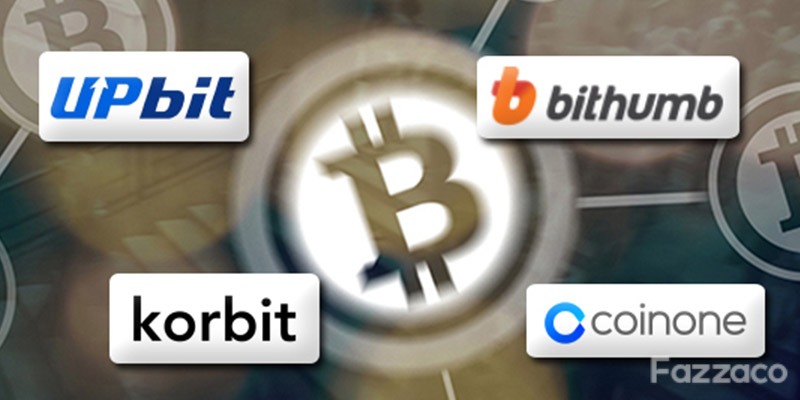
As one of the most popular bitcoin trading markets, South Korea has been a major center for crypto exchanges over the last few years.The top four cryptocurrency exchanges account for 90% of all crypto-asset trading volumes of the country. Upbit, Bithumb, Coinone, and Korbit are among the four. They've all signed contracts with banks for real-name account verification, and the Korean Internet and Security Agency has certified them.
Despite the government's strict controls, Upbit boasts a user base of over 8.9 million users and a trade volume of over $2.6 billion. It is administered by a subsidiary of Kakao, the Korean digital behemoth.
Bithumb has more than 8 million registered users and 1 million users of its mobile app. Bithumb, on the other hand, has been the victim of several cyberattacks throughout the years.
In the year of 2022, Coinone plans to grow in Southeast Asia. It still remains one of South Korea's largest cryptocurrency exchanges.
Korbit was the first cryptocurrency exchange in Korea, and it is currently the fourth largest cryptocurrency exchange.
- Crypto Trading Volumes in South Korea
For Korean investors, digital assets and cryptocurrency markets have always piqued their interest. According to statistics from a study conducted in 2021, 40.4% of 1,885 workers surveyed said they have invested in bitcoin. Surprisingly, almost 49.8% of South Korean employees aged 30 to 39 claimed they have invested in cryptocurrency. Workers in their twenties came in second with 37.1%.
According to a new report by the Financial Service Commission, the country's crypto market rose to 55 trillion won ($45.9 billion) by the end of 2021.
The FSC studied transaction data from 24 regulated cryptocurrency exchanges and discovered that daily crypto exchange transactions in Korea were 11.3 trillion won ($9.4 billion). A total of 3.37 trillion won ($2.8 billion) was generated by 24 firms. Over the last year, nine crypto exchanges have declared a net loss.
- Why South Korea Upholds A Strict Attitude towards Crypto
As a result of the investors' enthusiasm, both criminals and regulators have taken notice too. Consequently, South Korea conducted a cryptocurrency crackdown aimed at increasing exchange transparency, reducing illicit activity such as money laundering, and providing a layer of regulatory protection for cryptocurrency investors.
- Where is the Korean Crypto Market Heading
For South Korean investors, cryptocurrencies have become an appealing choice due to a mix of political unpredictability, familiarity with micropayment systems, and economic concerns. The country has always been a pioneer in the adoption of important world-changing technology. It's possible that the country may once again set the pace by introducing cryptocurrencies into regular trade.
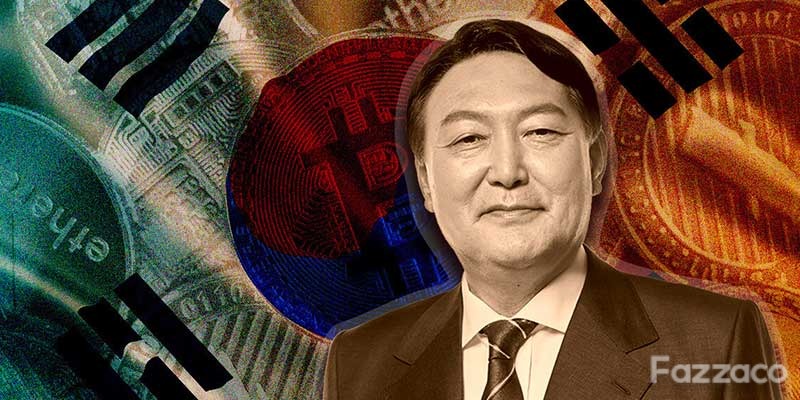
In this March, South Korea just had its presidential elections, and the opposition candidate Yoon Suk-yeol won the election, defeating candidate Lee Jae-myung of the incumbent Democratic Party. Both candidates made cryptocurrency a priority in order to appeal to younger voters, but it's unclear whether the winner, Yoon Suk-yeol, will follow through on his promises.
 Subscribe Now