


LUNA Crash - Reasons, Impact and Guesses
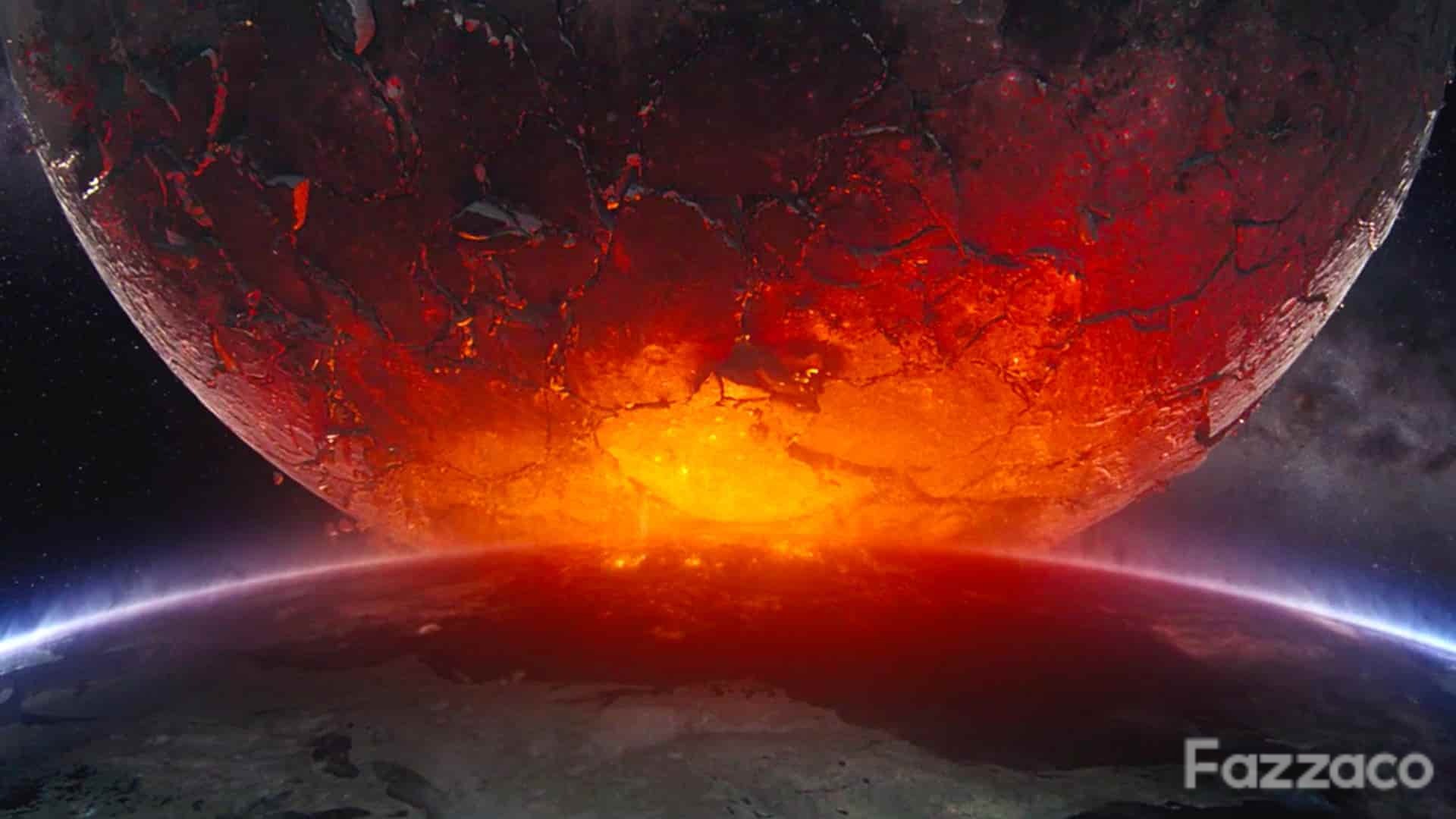
Roland Emmerich is a genius, I am saying that not because how much people love his latest production Moonfall, which has flopped disastrously by the way, but because he magically "foresaw" what was coming.
Now the "moon" is literally falling on us - LUNA crashed, in an epic way.
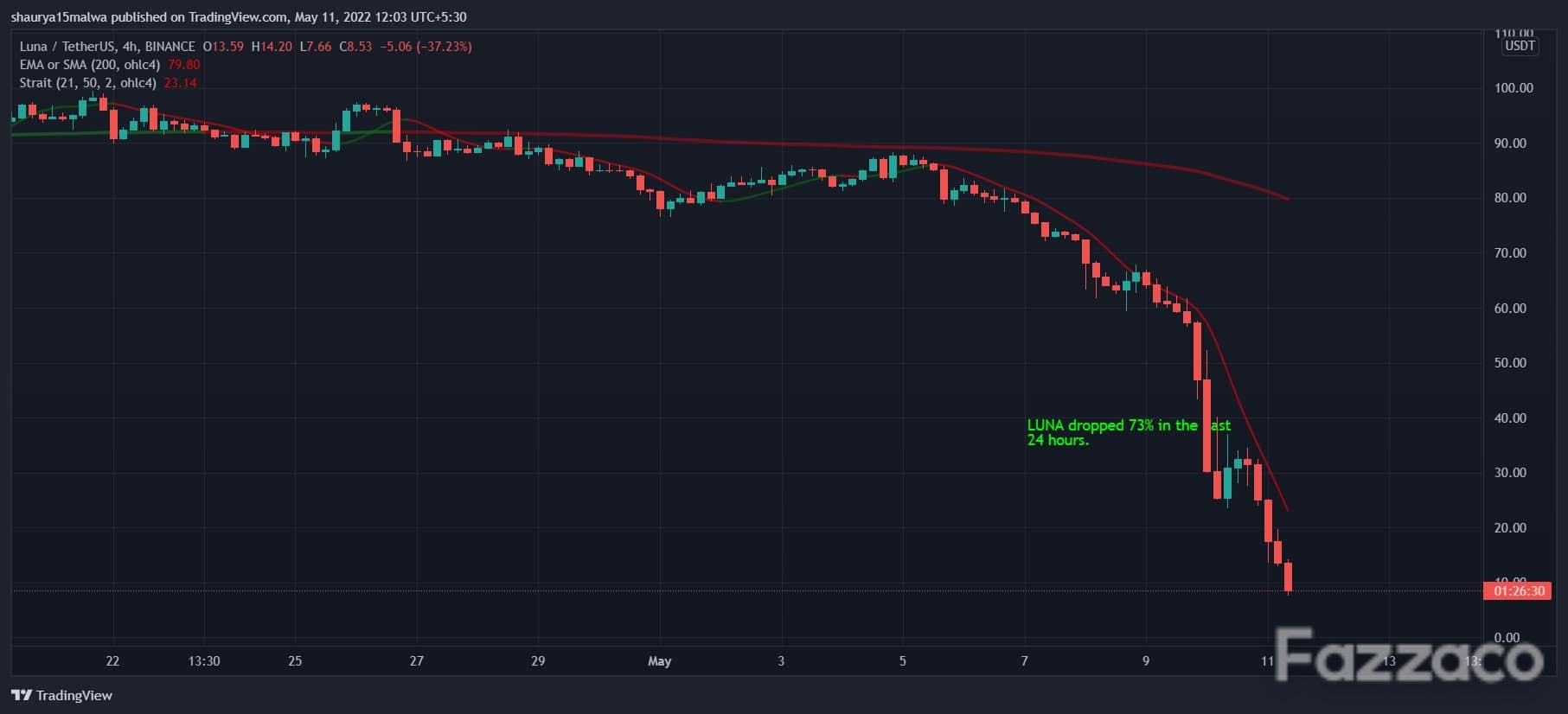
The cryptocurrency plummeted from $120 to $0.02, losing 99.9% of its value in the 48 hours following a black swan event on May 11 and 12.
Specifically, on this Wednesday, the coin's value took a nosedive from roughly $6.75 to slightly over $1. It dropped even more on Thursday, and as of that afternoon, it was just worth $0.02.
The stock market retraced to $25,200, a level not seen since December 2020 - altcoins are typically associated to Bitcoin strength or weakness, and the crypto markets' connection to the S&P 500 as a whole touched a 17-month high in March 2022.
LUNA, Terra and more
Both Terra (LUNA) and TerraUSD (UST) are developed by Terraform Labs, a Seoul-based company founded in 2018 by Do Kwon. The Terra network's stablecoins are collateralized by the LUNA currency, which is a native asset. So, when you invest in Terra, you get LUNA.
Holders of LUNA can pay network fees, vote in elections, invest in the Tendermint Delegated Proof of Stake consensus method, and peg stablecoins.
The concept is called "algorithmic stablecoin", in which LUNA is burned to mint UST to keep it stable when it loses its 1:1 peg to the dollar, and vice versa, is distinct from how existing stable currencies like as Tether (USDT) and USD Coin (USDC) work. If UST reaches 0.99, a little quantity of LUNA is burned, and if it reaches 1.01, a small amount of UST is burned.
Reasons - Who caused the "moonfall"?
For some reasons, the intricate algorithms failed miserably recently. LUNA and UST both plummeted at the same moment, in what observers have dubbed a "death spiral." In other words, investors hurried to sell their digital assets before the "algorithmic" stabilizer could kick in.
Still, no one knows for sure what was behind this disaster, and Do Kwon has not provided an explanation to investors. One theory that is viral online suggests that there was a coordinated attempt to exploit Terra and induce a Bitcoin meltdown, allowing 'whales' to buy in at a low price.
As part of this complex plot, the buyers appear to have purchased around $1 billion worth of UST stablecoins, while "shorting" bitcoin (which is a risky way to make money, by betting on the price of an asset falling — instead of rising).
They waited until a Saturday night so there were low trading volumes and bids. Then they began selling UST in large numbers, triggering all subsequent selling in a low-volume market, thereby breaking the USD peg.
And there is a "death spiral" inside the algorithm, so when it comes into effect, it starts selling bitcoin and Avalanche, and that leads to more selling.
On the other hand, considering the enormous deals involved, many on social media are blaming the big US hedge firms. Citadel Securities and BlackRock, two financial giants, have previously published statements denying any participation in Terra's fall, according to an ABC news report.
"It's almost like an evil genius plot, because there are a lot of steps to it," said Lisa Wade, the CEO of blockchain company DigitalX.
Impact - Tightening regulations
LUNA's market value plunged from $US40 billion to around $US500 million, causing a sell-off and a crisis of trust across the cryptocurrency industry.
In light of the freefall of LUNA along with many other cryptocurrencies, Ashley Alder, who is the CEO of the Hong Kong Securities and Futures Commission as well as the chair of the International Organization of Securities Commissions (IOSCO) Board, said, "I would not expect that to be the case same time next year. I think that [lack of regulation] is bound to change."
The Financial Stability Board, another international watchdoy, is already working on laws governing unbacked crypto, while the Bank of England is exploring stablecoin regulation.
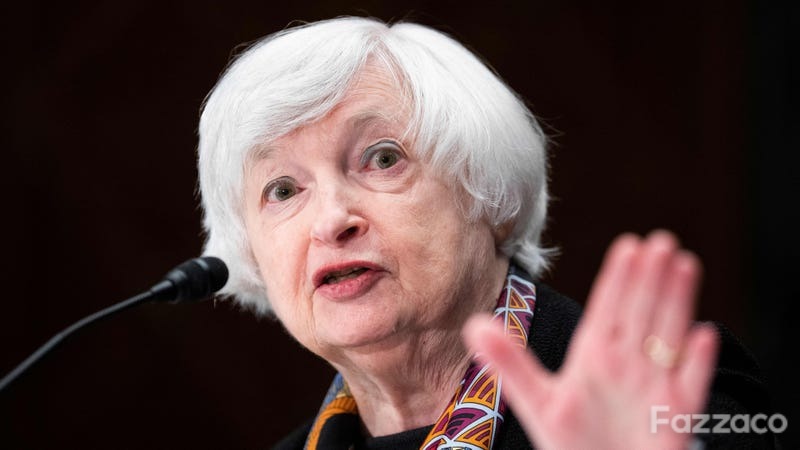
Earlier, US Treasury Secretary Janet Yellen urged for an immediate regulatory "framework" to regulate stablecoins. Yellen and Republican Sen. Pat Toomey discussed getting rules enacted before the end of 2022 in their appearance before the Senate Banking Committee.
Who's Next?
It is not just the "moon" is falling, crypto prices are falling all over the place. Bitcoin has lost more than half of its value in the last six months, plummeting about 40% between May 4 and May 12.
The SHIB has likewise plunged 50% last week. That is how poorly this currency has performed in the market. Whales are to blame for the Shiba Inu's plummeting value. If whales do not stop selling, Shiba Inu might continue to fall and become the next Terra LUNA.
Could Tether, the world's largest stablecoin, follow suit? So, what happens next?
Guesses - Will the market ever recover?
On Reddit, members of LUNA's dedicated forum have been bemoaning their losses. Many people even claimed that they might end up being homeless.
"I lost almost $450,000, I cannot pay the bank," wrote a Redditor.
Do Kwon, the founder asked the investors to "hold on tight" this week as he was close to unveiling a recovery plan for UST.
"I understand the last 72 hours have been extremely tough on all of you – know that I am resolved to work with every one of you to weather this crisis, and we will build our way out of this," he added in a following tweet.
Shortly after Kwon's announcement of his plan, LUNA saw a small bounce-back to $4.55 before it plunged back to a new low.
It is in fact a question of dilemma to recover the market. To restore UST, it is inevitable to reduce the supply, which means the supply of LUNA has to be increased by burning UST, which then in turn will cause LUNA to drop to zero value. If LUNA becomes literally worthless, it will take a serious toll on investors' confidence in UST.
On the other hand, to give up UST, then the very existence of LUNA will cease to make sense. Also, LUNA has already been issued in excess, so it has long been impossible to return to the original price.
In general, the possibility of market recovery is still very low, and if there is a decoupling between UST and LUNA, investor confidence would be greatly affected. Even if UST somehow managed to get back to its one USD price, it doesn't mean that everything is done and they can rest assured. The complete design of Terra has to be revised, such as more reserves and limited size etc.
I guess we can say that the prices of cryptocurrencies are largely and purely built on investor confidence. So, maybe LUNA price might rise back after the UST is pegged back to the dollar. But the key is, whether their team is able to find a way to prove to the investors that such disaster will never occur again. Once done, investor confidence will be rebuilt, and maybe the token still has the potential to bounce back after this meltdown. From what we are looking at, however, that seems to be a very unlikely event.
 Subscribe Now