


2020 Forex Statistics
 Key statistics explaining the worlds largest financial market, Foreign Exchange (Forex), are discussed below. Read on to discover key facts about the forex industry as well as its risks, brokers, traders and software.
Forex Trading Statistics
Forex markets had a daily turnover of $6.6 trillion dollars in 2019, up from $5.1 trillion in 2016.
The total value of the forex industry increased from $1.934 quadrillion dollars in 2016 to $2.409 in 2019.
Forex is the only financial market in the world to operate 24 hours a day.
The forex market is comprised of 170 different currencies.
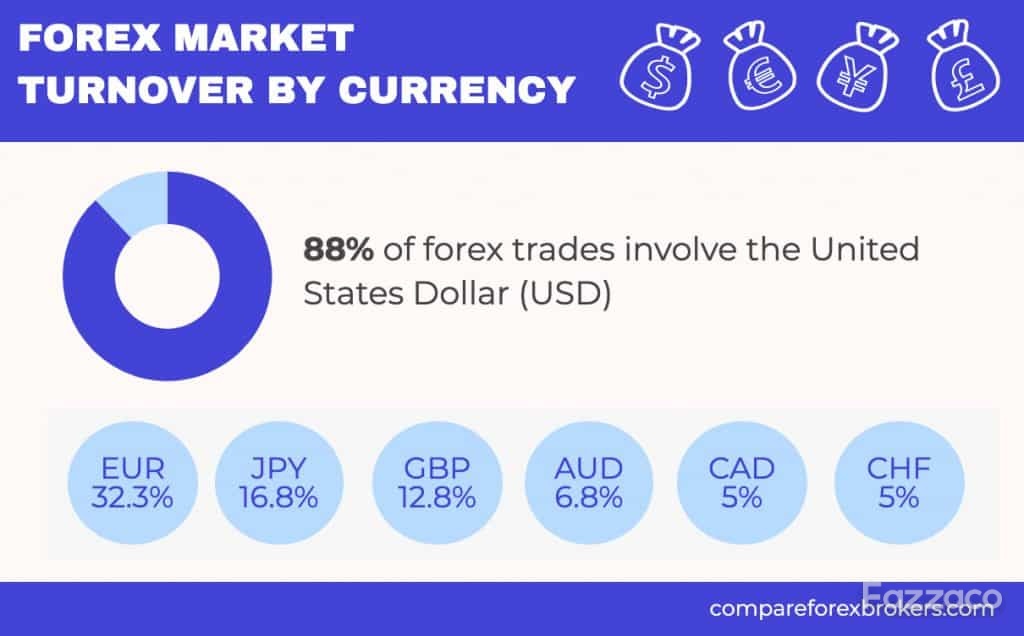
The United States Dollar (USD) is on one side of 88% of all forex trades.
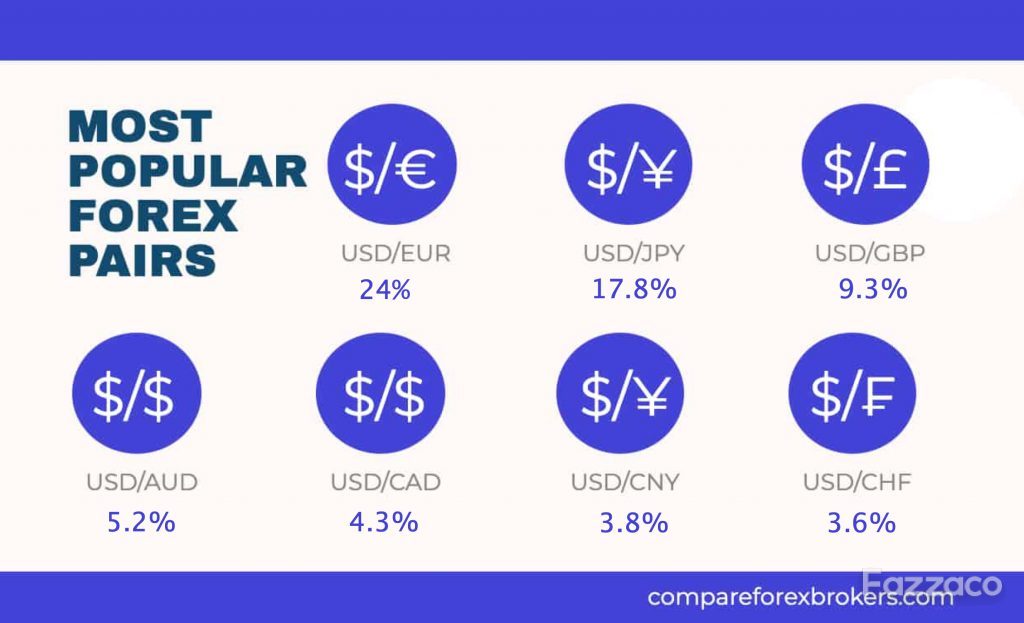
Seven currency pairs make up 68% of the forex markets trading volume.
Female forex traders tend to outperform male traders by 1.8%.
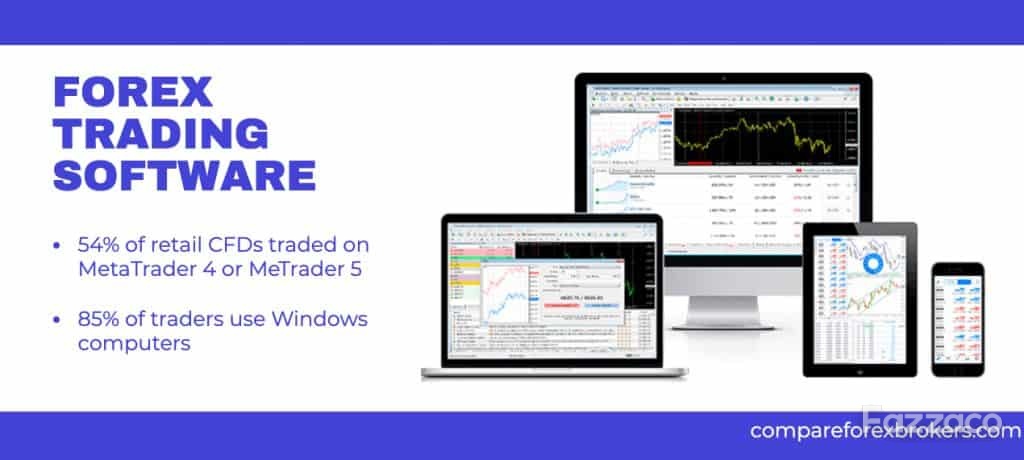
54% of retail traders use MetaTrader 4 or MetaTrader 5.
IC Markets is the biggest Australian retail forex broker.
Since 2009, over 6,000 different cryptocurrencies have been released.
How Big Is The Forex Market
The forex market is the largest financial market in the world in terms of trading volume, liquidity and value. Unlike other markets such as equities, the forex industry is the only financial market with 24/7 availability.
Last year the Bank for International Settlements (BIS) revealed that the global forex market turns over $6.6 trillion on average every single day. While in 2016 the forex industry was valued at $1.934 quadrillion dollars, in 2019 it was estimated in the region of a staggering $2.409 quadrillion.
Not surprisingly, spot forex is the most popular asset class with $2 trillion worth of spot transactions traded daily in foreign exchange markets. After spot fx, the instruments with the largest daily turnover are:
Forwards $1 trillion
Foreign Exchange Swaps $3.2 trillion
Currency Swaps $108 billion
Options and others $294 billion
As the largest financial market in the world, forex market participants are mainly financial institutions such as hedge funds, investment managers, multinational corporations, as well as commercial, investment and central banks. Retail forex trading only accounts for a mere 5.5% of the entire forex market globally.
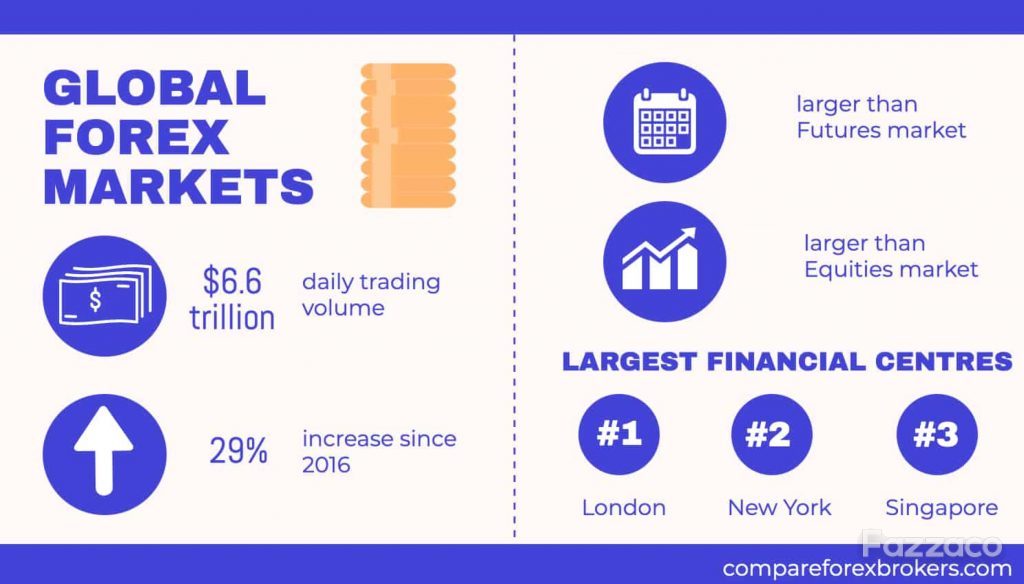
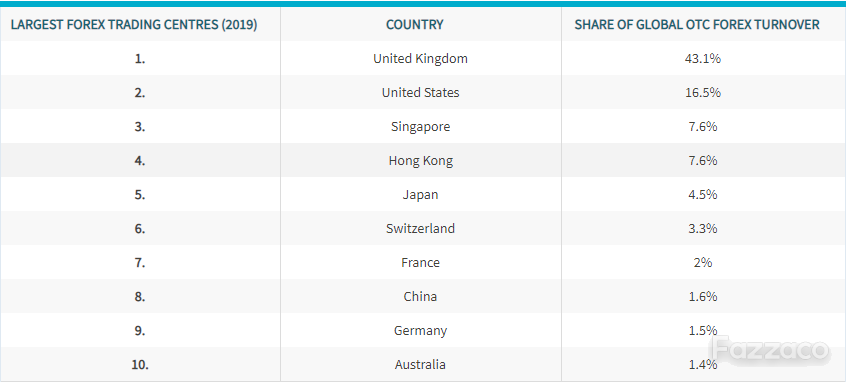
The majority of forex trading is facilitated in five major financial hubs around the world, with 79% of forex trading occurring in the United Kingdom, United States, Hong Kong, Singapore and Japan. The UK is by far the largest fx trading centre, contributing to 43.1% of the worlds foreign exchange turnover. With the recent rise in popularity of Forex trading in Asia, China has increased from the 13th to 8th largest forex trading centre in the world.
The 7 Major Currency Pairs
The global forex market is comprised of over 170 different major, minor and exotic currencies. Although traders’ have a diverse range of currency pair options to choose from, seven major fx pairs make up 68% of global foreign exchange transactions. In 2019, the 7 most frequently traded currency pairs and its share of the OTC forex turnover was the:
United States Dollar vs Euro 24%
United States Dollar vs Japanese Yen 17.8%
United States Dollar vs Great British Pound 9.3%
United States Dollar vs Australian Dollar 5.2%
United States Dollar vs Canadian Dollar 4.3%
United States Dollar vs Chinese Yuan 3.8%
United States Dollar vs Swiss Franc 3.6%
The Worlds Most Popular Currencies
The United States Dollar plays a key role in financial markets and international economics due to pegged currencies, dollarization, as well as most Central Banks holding their reserves in USD. Although 43.1% of foreign exchange transactions take place in the UK, 88% of global forex transactions include the USD on one side of the transaction, showing the dominance of the USD currency in international forex trading.
The second most likely currency to be included in a forex transaction is the Euro. A boost in turnover of the Euro during the past 3 years can be linked to increased turnover of EUR/CHF and EUR/JPY currency pairs. While the third most likely currency to be included in forex transactions is the Japanese Yen, turnover has declined since 2016. Unlike the EUR and JPY, the volume of GBP, AUD, CAD and CHF being traded has remained unchanged over the last 3 years.
The average daily turnover for emerging currencies has increased recently. In 2016, 21% of total forex turnover could be attributed to emerging currencies, compared to 24.5% last year.
Forex Risk
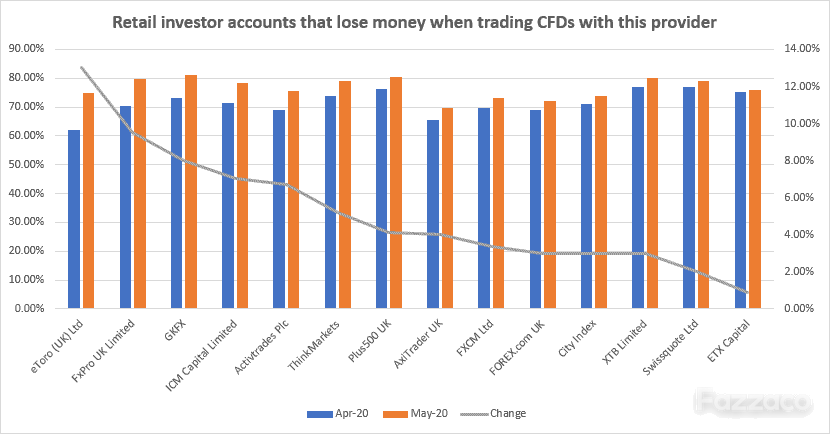
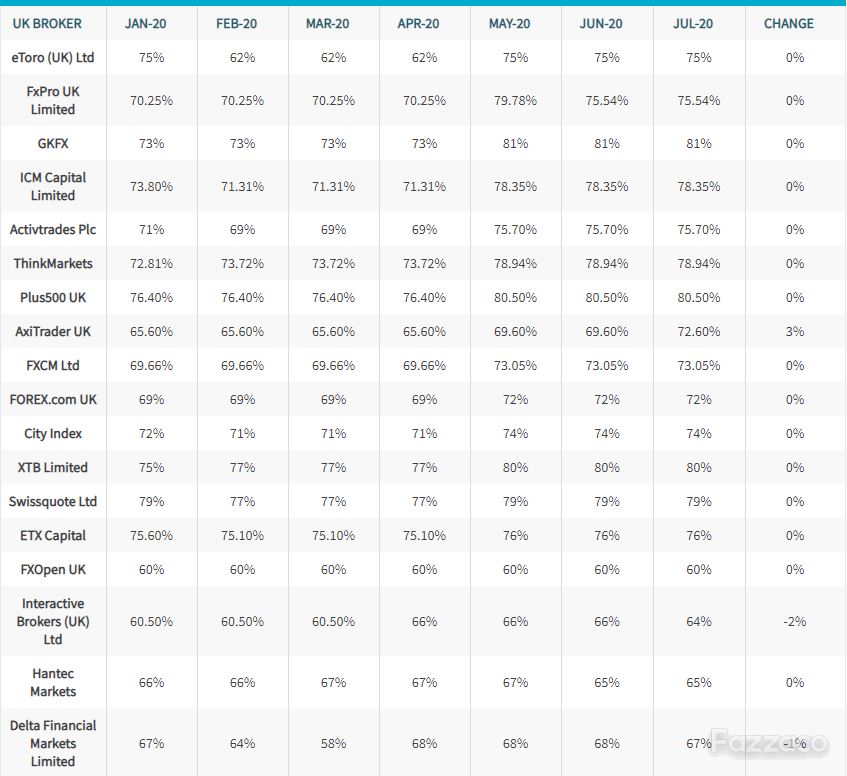
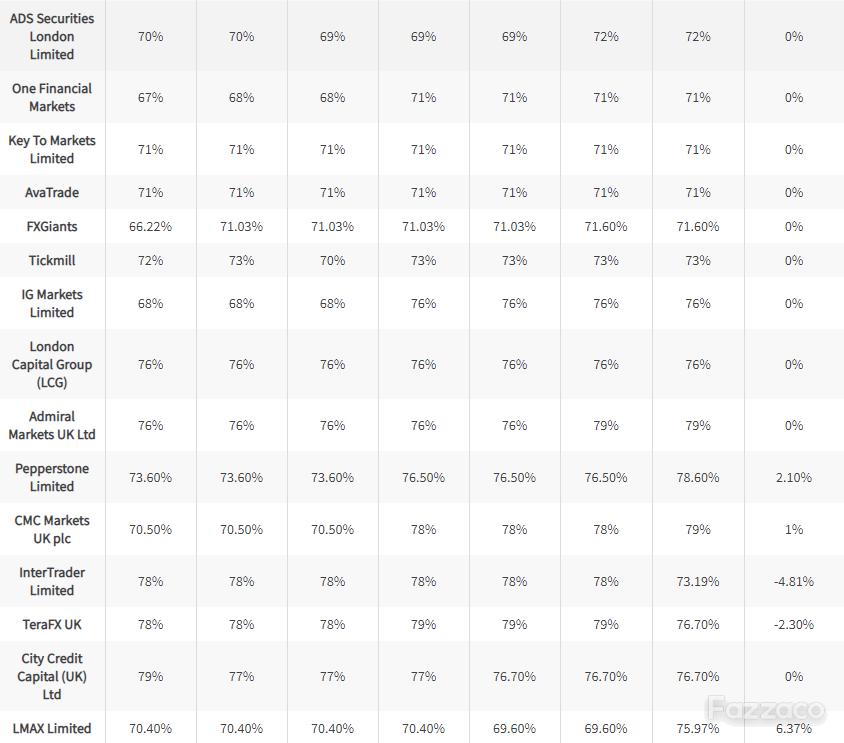
As a retail investor, speculating on forex involves a very high risk of losing money due to high leverage and volatile currency markets. When 35 foreign exchange brokers were assessed, CompareForexBrokers found that on average 71% of retail fx traders lose money when trading forex.
Although 29% of retail investors achieve capital gains, 99% of fx traders fail to make profits for more than 4 continuous quarters.

Forex Trader Demographics
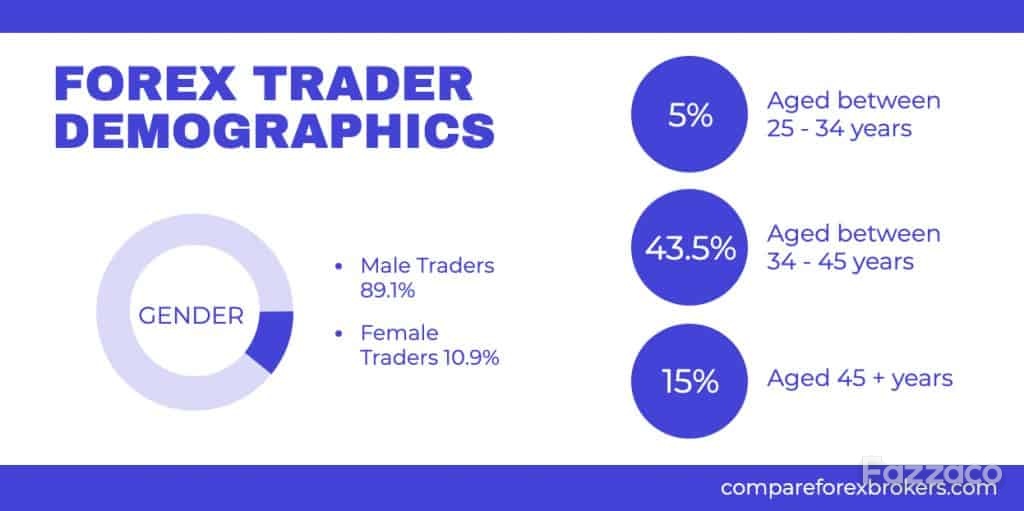
The majority of retail fx investors’ are men, with only 10% of traders being female. Although far fewer women trade forex than men, a study carried out by Warwick Business School found females outperform men by 1.8% when investing in financial markets, as men are more likely to take risks and break trading rules, while women follow long-term strategies.
In regards to age, 43.5% of traders are aged between 34-45 years, 5% of forex traders are millennials aged between 25-34 while 15% of forex traders are over the age of 45.
The Worlds Top Forex Brokers
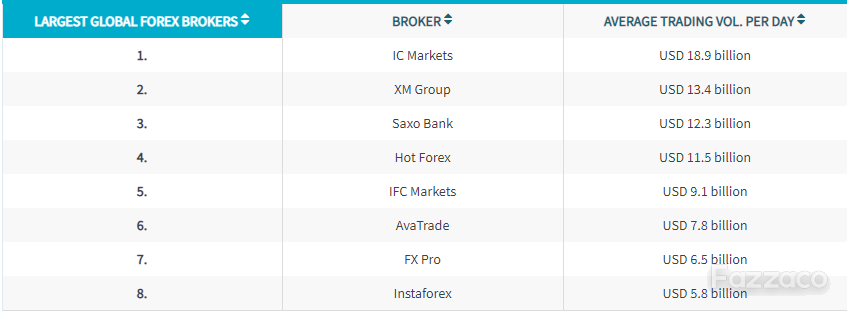
Australian Broker IC Markets is the largest Australian-based forex broker in the world as mentioned in our forex broker reviews. Retail Forex traders gravitate to IC Markets as they are regulated by top-tier financial authorities ASIC (Australian Securities and Investments Commission), the FSA (The Seychelles Financial Services Authority) and CySEC (Cyprus Securities Exchange Commission). Pepperstone is the second-largest and overseen by ASIC, the FCA (Financial Conduct Authority, UK) and the DFSA (Dubai Financial Services Authority).
The largest US forex broker is XM, regulated by a range of financial authorities including CySEC in Cyprus while the largest forex brokers in Europe are XM and Saxo Bank (often called Saxo Capital Markets).
Largest Global Forex Brokers by Daily Trading Volume
Forex Trading Software
Trading Platforms
MetaTrader 4 is the most popular trading platform currently available to retail investors. In 2018, it was found that 54% of all retail CFDs were traded using MetaQuotes software (MetaTrader 4 and MetaTrader 5). Forex traders tend to prefer Windows over other computer software, with 85% of traders using Windows compatible trading platforms.
Mobile Trading
As continuous technical and fundamental analysis can increase the chances of successful forex trading by 10%-30%, today’s forex traders want constant access to their forex brokers and trading platforms. When looking for a new broker to trade forex with 35% of traders use their mobile to research account types and trading features. In regards to traders’ software preferences, Android is 3% more popular than iPhones using iOS software, while Samsung is more popular than other devices.
History of Forex Markets
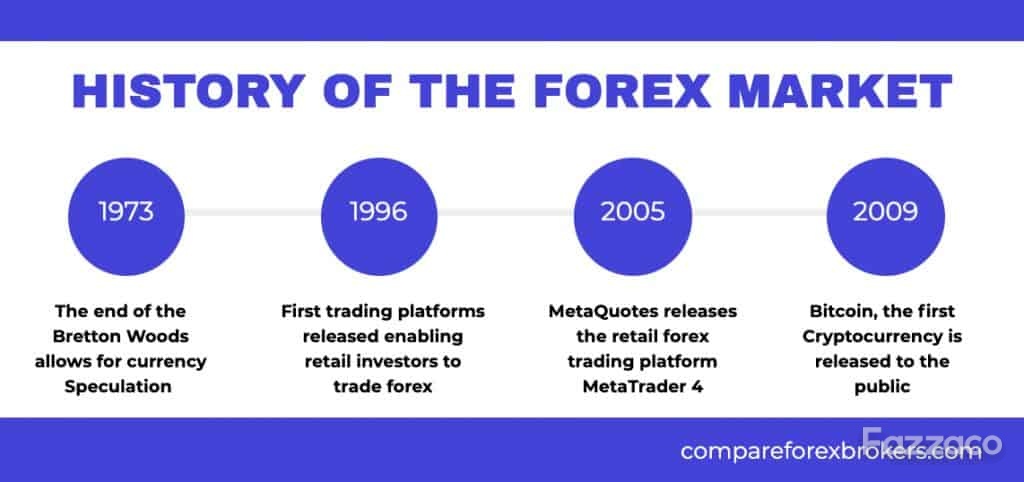
Prior to the 1970s, forex trading as its known today was prohibited due to the Gold Standard and Bretton Woods systems. Exchange rates were controlled, therefore traders could not speculate on foreign currency movements. After the collapse of the Bretton Woods system in 1973, floating exchange rates opened the door for modern-day forex trading.
Trading Platforms
In 1996, the introduction of forex trading platforms allowed retail investors to participate in foreign exchange markets for the first time. Following the introduction of retail traders to forex markets, MetaQuotes began releasing trading platforms designed for retail traders. In 2005 MetaTrader 4 (MT4) was launched, which continues to be the gold standard and most popular retail forex trading platform to date. Although MetaQuotes released MetaTrader 5 in 2010, MT4 still remains the most popular retail trading platform in the world.
Cryptocurrency
The release of the first decentralised Cryptocurrency in 2009 was a pivotal moment in the history of CFD trading and financial markets. Since Bitcoins release, over 6,000 other cryptocurrencies have been created (that are usually traded against the USD, EUR or AUD). The total value of Cryptocurrency markets is now estimated at $201 billion dollars.
Sources
BIS Triennial Central Bank Survey
Warwick Business School
Forex Trading Stats for Marketers
BIS: Sizing up Global Foreign Exchange Markets
MetaTrader 4 Market Share
Largest Forex Brokers
Top 10 Cryptocurrencies
 Subscribe Now