


MiFID II Tightens Further: Compliance Cost Has Become a Structural Burden for Brokers

As the European Securities and Markets Authority (ESMA) advances its regulatory reforms under the MiFID II framework this May, forex and CFD brokers are facing unprecedented pressure. One key proposal that brokers cannot afford to overlook is the addition of a mandatory field in transaction reporting, requiring firms to clearly indicate whether a client is classified as a retail client, an elective professional client, a professional client, or an eligible counterparty.
This change has a direct impact on CFD brokers - particularly those serving both retail and professional clients. It also enables regulators to better identify retail trading patterns, allowing for more targeted oversight of how complex financial products are distributed. As noted by the London Stock Exchange Group (LSEG) on LinkedIn, this measure will empower national regulators to analyze transaction data more effectively and monitor emerging market trends.
In recent years, several major brokers - including IronFX, BDSwiss, Exness, and FXTM - have exited the European retail market, pivoting toward institutional clients or focusing solely on professional traders. Others continue serving retail clients through offshore entities. Clearly, tightening regulation has become a key driver reshaping the market landscape.
Dual-Track Regulation Deepens: Transparency Reforms Accelerate
In 2025, MiFID II revisions are entering deeper territory. Both the EU and the UK are moving forward with a series of transparency reforms that are fundamentally reshaping trading obligations.
One of the most significant changes is the implementation of the Designated Publishing Entity (DPE) regime in the EU as of February this year, aimed at simplifying OTC trade reporting. This mirrors the UK's Designated Reporter (DR) regime introduced in 2024.
Under the previous MiFID II framework, firms had to determine - on a trade-by-trade basis - whether they qualified as a Systematic Internaliser (SI), often forcing them into costly pre-trade transparency obligations. Many opted into SI status simply to provide trade reporting services, resulting in operational inefficiencies. The introduction of DPE and DR significantly reduces the incentive to become an SI, and the number of SIs in the market is expected to decline.
Meanwhile, ESMA is pressing ahead with reforms to both pre-trade and post-trade transparency, paving the way for the long-awaited consolidated tape for equities. If timelines hold, the EU's consolidated tape could go live as early as 2026, with the UK actively developing its own version.
In parallel, ESMA is steadily advancing revisions to the Regulatory Technical Standards (RTS). Notably, the minimum quote size for SIs is set to increase from 10% of the Standard Market Size (SMS) to 100% - a change that will have far-reaching implications for market liquidity dynamics.
Compliance: No Longer a Cost Center, But a Survival Challenge
The compliance burden extends far beyond regulatory filings. According to PwC's 2025 Global Compliance Survey, 77% of financial institutions say regulatory complexity is directly constraining their growth, with transaction reporting (TR) cited as the single biggest pain point.
MiFID II transaction reporting involves 65 reportable fields, while EMIR requires over 200 - each with its own logic and interpretation. For brokers operating across multiple jurisdictions, managing this patchwork of requirements is an enormous challenge. As former FCA regulator and now Director of Transaction Reporting at Qomply, Sophia Fulugunya, put it:
"MiFID II alone spans over 30,000 pages of regulations, guidelines, Q&As, and technical materials. A single error in a reporting field can trigger a regulatory investigation."
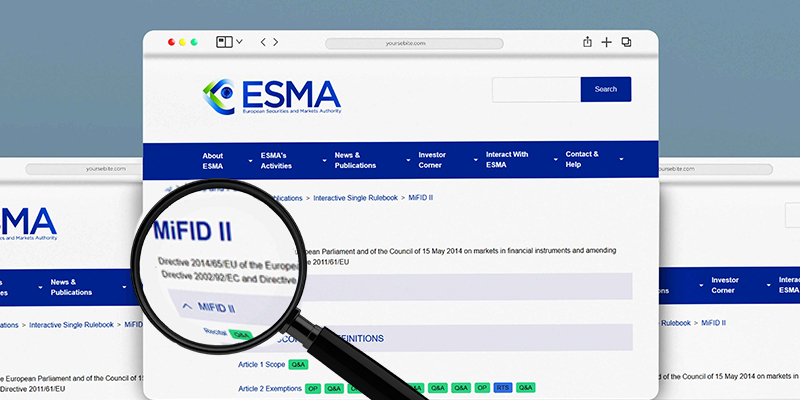
Even more concerning is the growing risk posed by talent turnover. Compliance roles are highly technical, and when experienced staff leave, they often take with them critical institutional knowledge. Without robust knowledge management systems, firms frequently find themselves repeating the same mistakes. Fulugunya noted:
"Without a proper knowledge retention system, firms are forced to start from scratch every time, continually fixing the same issues."
Technology and Outsourcing: The Only Way Out
With compliance costs becoming a structural burden, more financial firms are turning to technology-driven solutions. PwC's report shows that 43% of firms have achieved improved efficiency and cost savings after implementing compliance technology.
Outsourcing or Managed Services - particularly in transaction reporting - is rapidly gaining traction. Many firms now rely on managed service providers to handle tasks such as data validation, report submissions, and compliance monitoring. This not only reduces internal operational strain but also shifts the risk of adapting to regulatory changes and technological upgrades to external partners.
However, while artificial intelligence (AI) shows promise in areas like monitoring and anti-money laundering, its application in transaction reporting is still in its infancy. Both the International Compliance Association (ICA) and the U.S. Financial Industry Regulatory Authority (FINRA) have cautioned that AI models face significant challenges related to data quality, model governance, and supervisory controls - and cannot yet replace human expertise in this domain.
The Broker's Dilemma: Where to Go From Here?
The ongoing evolution of MiFID II is hitting CFD brokers particularly hard. Stricter client classification requirements, more demanding transaction reporting obligations, and heightened transparency rules are transforming compliance from a back-office function into a core operational risk.
For most small and mid-sized brokers, absorbing this level of regulatory complexity in-house is increasingly unrealistic. Looking ahead, brokers face three strategic paths:
Pivot toward serving only professional clients or institutional business, reducing retail-related compliance burdens.
Shift operations offshore to avoid the EU's regulatory framework.
Fully embrace technology and outsourcing to build a scalable, future-proof compliance infrastructure.
Whichever path is chosen, one thing is certain: compliance is no longer just a cost of doing business - it is now a structural pressure point that could determine whether a firm survives or fails.
 Subscribe Now