
Add Fazzaco to desktop

Add Fazzaco to desktop

Access Fazzaco from desktop next time

Add now
English

Banks ‘Must’ Pass on Reduce Rates to Borrowers: CBSL

Source: Regulation Asia Duruthu Chandrasekera
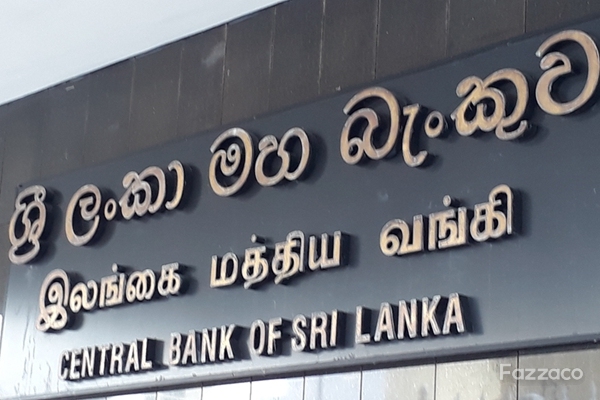
Sri Lanka’s central bank has cut interest rates again and is ramping up pressure for banks to reduce the rates they charge borrowers, particularly small businesses. 
CBSL (Central Bank of Sri Lanka) on Wednesday (10 July) reduced the Standing Deposit Facility Rate (SDFR) and the Standing Lending Facility Rate (SLFR) by 100 basis points each to 4.50 percent and 5.50 percent, respectively, stressing that banks “must” pass these benefits to their customers.
The Monetary Board decision is aimed at cutting lending rates to bolster support for small businesses and fast track economic revival. The year-to-date drop in the average weighted prime lending rate is 146 basis points, closely in line with the 150 basis points cut in key policy rates before the latest rate cut.
However, the rates on new lending and overall lending to end-users have come down by just 112 basis points and 63 basis points, respectively, which the Monetary Board views as inadequate. The lending rates should be single digit levels, CBSL Governor WD Lakshman said.
“The Monetary Board wishes to strongly reiterate that all financial institutions led by licensed commercial banks (LCBs) must pass on the full benefit of the cumulative reduction of 250 basis points in policy interest rates thus far during the year without delay,” Lakshman said on Thursday.
“LCBs are also expected to release to the private sector borrowers the enhanced levels of liquidity effected by the reduction of the SRR (Statutory Reserve Ratio) by 300 basis points thus far during the year, which has also reduced the cost of funds of banks.”
The additional liquidity must be used to lend to productive sectors of the economy, along with concessionary credit schemes announced by CBSL, to help “needy sectors of the economy,” he added.
Credit extended to Sri Lanka’s private sector contracted to 6.4 percent in May, down from 7.6 percent in April. On a cumulative basis, credit to the private sector increased by just LKR 89.9 billion during the first 5 months of 2020.
CBSL recently appointed a committee to probe why commercial banks haven’t reduced their lending rates over the past few months, despite numerous measures announced by the central bank incentivising them to do so.
“We are daily taking action to address this issue. We are having a dialogue with the institutions to expedite facilities and to revive the economy through lower lending rates,” Lakshman said.
According to CBSL Senior Deputy Governor Dr. Nandalal Weerasinghe, the reluctance to reduce interest rates is due to the high cost of funds for banks. Banks need to wait at least a year to rationalise the cost of funds, due to existing contractual obligations on borrowings and deposits that need to be met at higher rates.
On average, the cost of funds for banks currently hovers around 8 to 9 percent. This is one of the main reasons CBSL introduced the 4 percent refinancing facility for banks to use to support SME lending, Weerasinghe said.
The US Federal Reserve has also just granted Sri Lanka access to a new USD 1 billion repo facility, which will enable CBSL to access US dollar liquidity, if the need arises.
“We might have liquidity needs going forward, in that situation we have this facility now open. We can use it if necessary, but we have not utilised it yet,” Weerasinghe said.
Create Company Page