


Convrs Omnichannel Messaging, WhatsApp and AI Tools for Brokers
Convrs provides an omnichannel messaging platform that brings customer conversations, automated workflows and AI assistance into a shared workspace. For brokers and fintech businesses, its role sits in the communication layer: helping sales and service teams handle inquiries across messaging apps and website chat, maintain context and coordinate follow-ups.
The practical question is how a conversation moves through the business. A prospect may ask about opening an account on WhatsApp, continue through web chat and later need help from another department. Convrs combines channel access with routing, conversation history and agent oversight so that teams can design that journey as an operational process. The value of such a deployment depends on how well customer identity, ownership and business records remain connected.
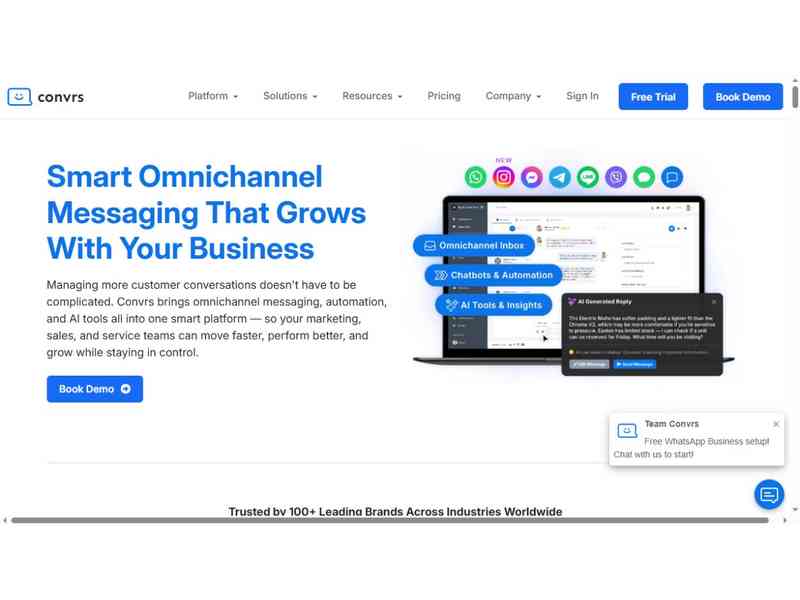
Convrs messaging platform. Source: Convrs website.
A shared inbox for messaging channels
Convrs describes an Omnichannel Inbox covering WhatsApp, Messenger, Telegram, LINE, Viber, web chat and SMS. Its current platform overview also includes Instagram. These channels are presented as entry points into a centralized workspace, where agents can access conversation history and collaborate through assignments, internal notes and mentions.
For a brokerage support team, centralization can make a handoff easier to manage. An inquiry about document submission may begin with an onboarding agent, then need a response from an account specialist. A shared record lets the next person understand what has already been asked and answered. Internal notes provide a place for operational context without asking the customer to repeat the whole exchange.
The design still requires a clear identity model. A messaging profile, an email address and a trading account number are different identifiers. During implementation, the broker should define how an authenticated customer is connected to the conversation and how an unverified inquiry is handled. A recognizable chat name should not become the basis for releasing account-specific information.
Routing and automation around the customer journey
The company’s Flow Builder supports configuring how conversations move, how information is processed and how it connects with a database or CRM system. Convrs also describes chatbots for frequently asked questions, lead capture and guided conversations, together with routing and handoff to human agents.
A useful onboarding workflow starts with a specific request rather than a broad sales script. A customer might need to know which step remains incomplete. The conversation can establish the topic, direct the customer to the appropriate process and assign the inquiry to the relevant team. If the customer cannot proceed, a human agent needs enough context to resolve the exception without restarting the journey.
That handoff should be tested under realistic conditions: outside normal working hours, when the assigned agent is unavailable and when the customer changes the subject. A demonstration that answers a standard question is only one part of the workflow. Queue ownership, follow-up timing and the treatment of unanswered requests determine how reliably it works in daily operations.
Automation also benefits from a defined stopping point. A routine request for general instructions can be answered from approved material, while an unresolved account issue should reach the appropriate person. This division allows teams to automate repeatable communication while retaining responsibility for decisions and exceptions.
WhatsApp campaigns and triggered notifications
Convrs positions the official WhatsApp Business Platform as a channel for campaigns, one-to-one conversations and automated notifications triggered by customer activity. Its platform overview connects these functions with shared team access and CRM-connected messaging.
For an operations team, the distinction between a service update and a marketing campaign matters when designing the workflow. A message explaining the next step in an existing request has a different purpose from an invitation to engage with a promotion. Campaign audiences, approved wording, customer preferences and follow-up ownership should be defined before a team scales outbound communication.
An event-driven reminder also needs an accurate source event. If the CRM marks a task complete after a message has already been queued, the implementation should establish whether the notification is cancelled, refreshed or sent unchanged. Duplicate events should not create duplicate conversations. These are integration acceptance questions, rather than assumptions about the behavior of every deployment.
The commercial discussion should separate the platform subscription, implementation work and any channel-related usage charges. The relevant question is the cost of the intended workflow at expected volumes, including the human effort needed to answer the conversations it generates. Message volume alone is a poor proxy for business value.
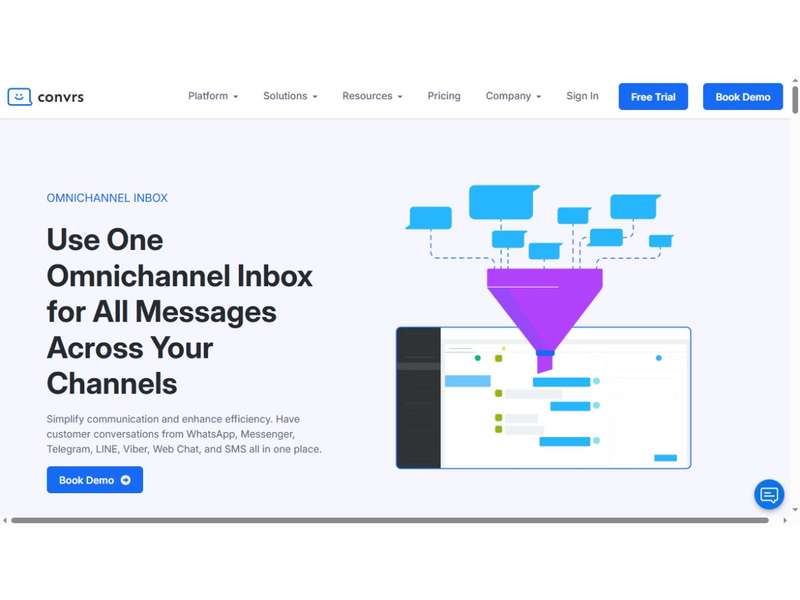
Convrs Omnichannel Inbox. Source: Convrs website.
AI assistance inside the conversation workflow
Convrs describes AI-generated suggested replies, conversation summaries, sentiment and satisfaction detection, and automatic topic tagging. Its inbox material also describes a writing assistant that helps agents refine grammar, tone and wording, together with real-time translation for active chats.
These functions address different stages of service work. A summary can help a newly assigned agent understand an earlier exchange. Suggested wording can make a response clearer. Topic tags can help a manager identify recurring questions. Translation can help teams communicate across languages, provided product names, account terminology and important conditions retain their meaning.
For a broker, the most useful review is a comparison with approved answers for actual service scenarios. Teams can test whether an assisted response preserves the distinction between an application being received and being approved, or between a request being submitted and completed. The language should reflect the underlying status accurately, even when the tone becomes friendlier.
Sentiment is a signal for investigation, not proof that a case has been resolved. A positive-sounding conversation may still contain an unanswered request. Supervisors should therefore assess AI summaries and classifications alongside the original exchange and the operational outcome. Human review is especially valuable when a customer disputes the status or meaning of a previous message.
CRM integration and the system of record
Convrs’ official material describes connecting conversation flows and data with a CRM or database. For buyers, the detail that matters is which information moves in each direction and which system remains authoritative. A shared inbox becomes more useful when an agent can understand the relevant customer context without manually copying data between applications.
A practical integration specification should identify the customer record key, the events that start a workflow and the fields that an agent may view or update. It should also define what happens when the receiving system is unavailable. A message being delivered and a CRM record being updated are separate outcomes, and operational reporting should distinguish them.
| Workflow | Acceptance evidence |
|---|---|
| Inquiry assignment | The right team receives the conversation and retains its history when ownership changes. |
| Customer matching | The intended CRM record is linked without exposing another customer’s details. |
| Triggered notification | The correct event produces one appropriate message, with completion and cancellation rules tested. |
| Human handoff | The agent sees the previous questions, answers and unresolved request. |
| Failed synchronization | The team can identify the failure and recover without silently losing the update. |
These checks turn a general integration claim into a concrete implementation scope. They also help separate configuration that is available in the proposed package from custom work that needs a named owner, timetable and acceptance criteria.
Access, history and supervisory visibility
The Omnichannel Inbox includes role-based control, chat history, real-time interaction monitoring and performance analytics. Convrs describes visibility into agent availability, response times and conversations, along with records of inbound and outbound messages. This provides a basis for organizing business communications within a managed environment.
The buyer’s access design should follow responsibilities. A sales agent may need access to assigned leads, while a service supervisor may need a broader view of active queues. When an employee changes role or leaves, the organization needs a documented process for changing access while preserving the business record.
Retention periods, exports, administrator privileges and the handling of sensitive attachments belong in the deployment discussion. Features that support recordkeeping do not by themselves establish that a particular organization has met every obligation. The operating model has to specify what is kept, who can retrieve it and how records are reviewed.
How to evaluate a broker deployment
A focused pilot can follow one complete journey: an inbound inquiry, customer matching, a guided response, a human escalation and a recorded outcome. Using a small number of representative channels makes it easier to see whether the workflow is coherent before expanding to more markets or teams.
Measure time to a useful response, successful handoffs, repeat contacts for the same issue and the share of cases that remain unresolved. Compare assisted and unassisted conversations using the same case definitions. A faster first reply is helpful, but it should not hide a longer path to resolution.
Convrs is most relevant where customer communication is fragmented across apps and departments and the business wants a shared process for messaging, automation and oversight. Its inbox, workflow configuration and AI assistance can be assessed as connected parts of that process. A strong demonstration should show the entire journey, including its exceptions, so that the buyer can judge how the platform fits the team’s actual workload.
 Subscribe Now