


Cyprus CIFs Take Note: CySEC Issues Key Compliance Notice
On February 13, CySEC has issued a comprehensive compliance notice that may change the way CIFs conduct business. The message is unmistakable: adapt to this new green framework or risk being left behind.
Why This is Crucial
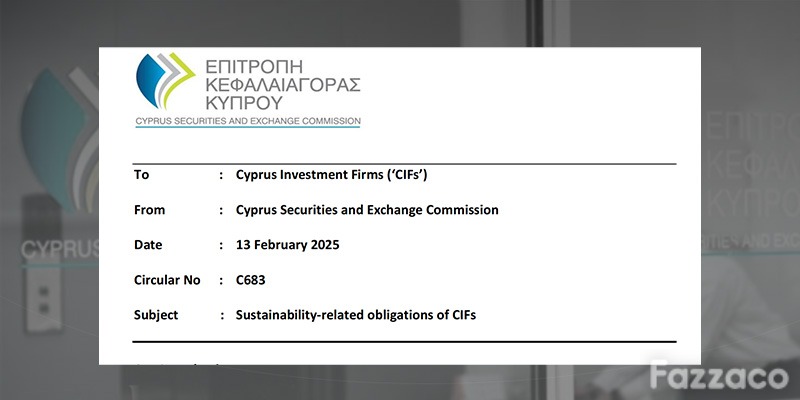
The European Green Deal isn't just a lofty ambition; it's becoming a regulatory mandate. The latest circular from CySEC highlights the urgency for CIFs to weave sustainability into the very fabric of their operations. According to CySEC, "The financial sector's role is critical in achieving these objectives," emphasizing that sustainable finance is now a central focus for the EU.
For CIFs, this goes far beyond merely fulfilling regulatory requirements. It's about rethinking how investments are managed, how clients are advised, and how financial products are structured. CySEC's guidelines offer a blueprint for navigating this new landscape, focusing on transparency, accountability, and innovation.
SFDR: A New Standard for Transparency
A major component of CySEC's directive is the Sustainability-Related Disclosures Regulation (SFDR), which is bringing significant changes to the financial sector. CIFs involved in portfolio management or investment advice are now required to provide detailed information on how sustainability risks are integrated into their practices.
Picture this scenario: a client comes in for an investment consultation, and instead of just discussing returns, you're explaining how their investments align with their sustainability goals. That's the new reality. CySEC mandates CIFs to publish policies on their websites explaining how sustainability factors are incorporated into investment decisions, as well as remuneration policies.
But there's a catch: If a CIF chooses to disregard sustainability risks, they must clearly explain why, leaving no room for vague explanations or greenwashing.
The EU Taxonomy: Defining What's "Green"
Ever wondered what exactly qualifies as a "green" investment? The EU Taxonomy Regulation clarifies this by providing a science-backed framework for classifying environmentally sustainable activities. The aim is to reduce greenwashing and ensure investors make informed choices.
CySEC requires CIFs to align their disclosures with the EU Taxonomy, applying strict technical standards to ensure that sustainability claims are credible. This means CIFs can no longer just label a product as "green"; they must provide robust data and thorough analysis to back it up.
MiFID II Takes Sustainability into Account
MiFID II, the cornerstone of EU investment regulation, has also been updated to reflect sustainability concerns. CIFs now need to integrate sustainability risks into their internal processes, risk management, and even conflict-of-interest policies.
One of the most notable changes is that CIFs are now required to assess clients' sustainability preferences as part of suitability assessments. Imagine a client wanting to invest in renewable energy projects—your firm would not only identify suitable options but also document how those choices match their sustainability goals. This shift puts clients' values front and center.
Sustainability in Product Design
For CIFs creating or distributing financial products, sustainability is no longer a secondary concern—it's a key consideration from the very beginning. The Commission Delegated Directive (EU) 2021/1269 mandates that CIFs incorporate sustainability goals at every stage of product development, from identifying the target market to deciding on distribution methods.
In other words, sustainability isn't just a trend; it's a core principle that must guide the development and marketing of financial products.
CySEC's Support for CIFs
CySEC isn't just laying down the law—it's offering practical guidance to help CIFs navigate this new era. The regulator encourages firms to invest in employee training, improve client communication, and continuously monitor their practices to stay in line with evolving regulations.
CySEC also points firms toward the latest ESMA guidance, which offers additional resources for understanding and complying with SFDR, the EU Taxonomy, and MiFID II updates.
The Broader Picture
This shift isn't just about compliance; it's about opportunity. By embracing sustainability, CIFs can position themselves as leaders in a rapidly changing financial environment. As more and more clients seek investments that reflect their values, firms that can meet this demand will have a distinct competitive advantage.
CySEC's circular serves as a wake-up call for CIFs: the future of finance is green, and the time to act is now. As CySEC puts it, "Sustainable finance has emerged as a key EU priority." For CIFs, the real question isn't whether to change—but how quickly they can adapt to this new challenge.
 Subscribe Now