


EBC Breaks Down Japan's G7 Strategy: Calculated Risk or Clever Diplomacy?
Summary: Japan's G7 strategy shifts from trade defence to strategic diplomacy. EBC breaks down what this bold pivot could mean for investors and the global economy.
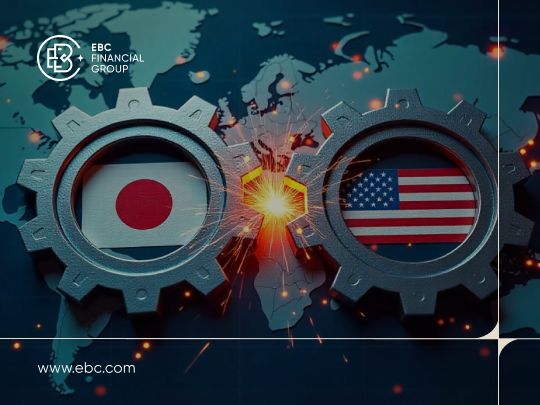
As the G7 summit in Canada approaches, Japan is stepping onto the global stage with a new kind of confidence. Once reacting defensively to U.S. tariffs, Tokyo is now playing offence, turning a trade flashpoint into a potential strategic win. EBC is committing our efforts to examining whether this move is a shrewd geopolitical pivot or a high-stakes gamble.
From Confrontation to Cooperation
The transformation in tone is striking. Prime Minister Shigeru Ishiba, who had previously labelled the United States' 25% tariff on Japanese automobile exports a "national crisis," is now taking a results-driven approach. Backed by recent discussions in Washington, Japan is keen to showcase real progress at the G7 meeting in mid-June.
Chief trade negotiator Ryosei Akazawa has briefed Ishiba after returning from U.S. talks, and Tokyo is now advancing proposals for enhanced collaboration. These include partnerships in shipbuilding, Arctic maritime routes, and military vessel repair, an agenda that stretches beyond economics into long-term geopolitical alignment.
This shift suggests that Japan is aiming not just to resolve disputes, but to recast its role in the global order, one built on mutual interests rather than reactive policies.
Reading the Global Signals
"Japan's inflationary backdrop and trade tensions with the U.S. reflect the broader recalibration underway in global economic policy. As Tokyo seeks strategic alignment at the G7, investors should stay focused on long-term fundamentals in an increasingly multipolar economic environment," said David Barrett, CEO of EBC Financial Group (UK) Ltd.
The world is watching more than bilateral deals. At a time when global supply chains remain fragile and protectionist rhetoric is escalating, Japan's pivot could set the tone for future economic alliances. Its emphasis on areas with security implications also hints at a broader strategic recalibration, not just a trade negotiation.
Domestic Realities Fuel the Urgency
This international strategy isn't playing out in a vacuum. At home, Japan is under pressure. The Ministry of Internal Affairs and Communications recently reported that core consumer inflation reached 3.5% in April, the sharpest annual rise in over two years. Food prices soared 7.0%, with rice alone climbing nearly 99% year-over-year, a peak not seen in five decades.
These inflationary spikes have complicated the Bank of Japan's monetary policy path. After hiking short-term interest rates to 0.5% in January, the central bank opted to hold steady in May, trying to balance inflation control with the need to support economic momentum amid global uncertainty.
Market Moves Reflect Growing Attention
Currency traders have taken note. Following the inflation announcement, the Japanese Yen appreciated against the U.S. Dollar, with the USD/JPY pair slipping below 144.00 and approaching 143.00 in recent sessions. The stronger yen suggests markets are paying close attention to how Japan is managing both domestic pressures and international manoeuvres.
G7: A Moment of Truth
What happens at the G7 summit could shape Japan's economic trajectory for months, if not years. Tokyo's proposals may lead to stronger bilateral frameworks with the U.S., more resilient supply chains, and a renewed role in global policy-making. But if talks stall or produce vague outcomes, the gamble may deepen domestic vulnerabilities and expose cracks in its foreign strategy.
For now, Japan is betting on diplomacy and vision over conflict. Whether this bold repositioning delivers results or backfires will be decided in Canada.
 Subscribe Now