


Forex Trading Software: A Key Factor for Brokerage Success
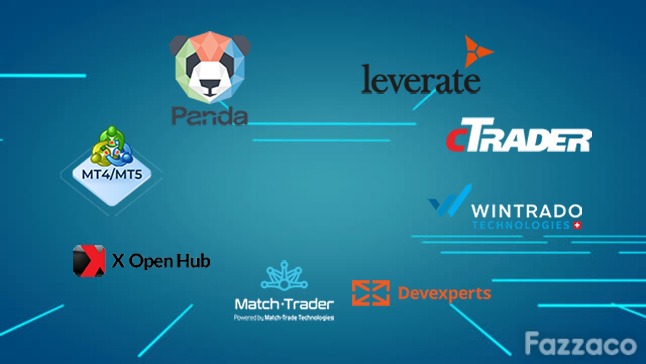
In forex trading, people often use multifunctional trading software platforms to access the services of brokers or other financial institutions to buy and sell currencies. Trading software, in a sense, serves as the core of the forex industry, as traders rely on it to trade and brokers rely on it to profit. Without it, the entire business would cease to exist. In the highly competitive forex market, how brokers choose the right software is one of the key factors that determine their success. Among the most well-known forex trading software are the MetaTrader series (MT4/MT5) developed by MetaQuotes, Ctrader by Spotware, Panda Trading Systems, Match-Trader, Leverate and X Open Hub.
MetaTrader series were launched in 2005 and 2010 respectively, and are still a popular trading platforms to date. The advantages of MT4 and MT5 lies in their stability, ease of use, multilingual support, multiple order types, custom indicators and automated trading features. MT4 and MT5 also have a huge trading community, where users can share strategies, signals and Expert Advisors (EA). cTrader, Match-Trader, Panda TS, X Open Hub, Wintrado, etc., also have their own unique characteristics and advantages of course which will be presented below.
So, who should brokers choose and why? This depends on the broker's capital, goals, client base and market factors. Generally speaking, we can give some suggestions from the perspectives of start-up brokers and existing brokers.
For Start-up Brokers: Ample Budget vs. Constraint Budget
For start-ups, some of the main considerations for choosing trading software are cost and efficiency. Start-up brokers usually come down with two options, one is to buy a main label, and the other is to buy a white label. The advantage of a main label is that it allows the broker to have full control, including CRM, risk control, quotes, etc., but the disadvantage of it is that it is expensive and requires strict review. As for a white label, it is cheap and can be launched quickly, but it is limited by the main label's settings and cannot customize its own trading settings and functions.
If money is not a problem, then don't think about white labels, because you don't want limited CRM and risk control. MetaQuotes announced in September 2022 that it will no longer provide support for MT4/5 white labels, so it is recommended to buy MT5 directly from them.
But, if budget is limited, then in this case where you still go ahead with the main label, MT4 and MT5 are not the most economical choice. Cost-wise, the purchase of MT4 includes monthly rent and license fees: before 2017, the main label monthly rent was $1,500 and the license fee was $75,000; after they marked up the price in 2017, they rose to $2,000 and $100,000 respectively.
As for the main label of cTrader, although its market share is second only to MT4 and MT5, it is not the most economical choice either, because it charges by data traffic. If you choose to buy a white label, first of all, exclude the MT4 since it is no longer available, and the MT5 white label approval is very strict, so brokers may consider the white label of cTrader or Match-Trader, both of which have good market share and user base, and the functions are also relatively complete.
Some people may consider adopting a "self-sufficient" strategy, but start-up brokers are actually not suitable for self-developed trading software, on the one hand because of the high capital cost, and on the other hand because of their lack of experience. In addition, it is not recommended that brokers choose newly established trading software providers on the market. In the absence of market verification, technical defects or security risks will cause serious damage to the business of start-up brokers.
Existing Brokers: Self-Developed Platforms Become A New Trend
For brokers who have already experienced the market, the main consideration for choosing trading software is whether it is innovative or competitive enough. Experienced brokers mostly provide both MT4 / MT5 to users at the same time. Additionally, many also provide self-developed trading software (including mobile apps or webtraders) to diversify their portfolio. This is currently a trend. And the non-MetaQuotes trading software provided by brokers is often more innovative, and it is also a test of the broker's R&D capabilities. Brokers need to consider the following aspects when choosing alternatives, whether it is self-developed or cooperated with emerging fintechs:
First, mobile compatibility. With mobile trading becomes increasingly widespread, more and more users choose to trade on their phones or tablets, so trading software must be compatible with mobile devices, including interface, speed, stability, etc.
Second, market verification and user acceptance. The market share and user experience of a trading software are important indicators to measure quality and reliability. Brokers should choose trading software that have a certain influence and reputation in the market, and avoid using those that have not been fully tested and verified, so as not to cause user dissatisfaction and loss.
Third, whether the functions are complete, including charts, user interface, economic calendar, order types, etc. The functions of trading software are important factors that affect user trading experience and results. Brokers should choose those that provide rich and advanced functions to meet the needs of different types and levels of users. For example, charts should support multiple time frames, indicators, analysis tools and trading modes; user interface should be simple and easy to use; economic calendar should provide the latest market updates; order types should include market orders, limit orders, stop loss orders, take profit orders, etc.
Fourth, the compatibility and scalability. That is to say, whether the bridging, CRM and other software on the market can connect to the platform you choose, otherwise the API connection is going to be troublesome. Because often enough, brokers need to cooperate with other service providers, such as liquidity providers, bridging companies, CRM companies, etc. If the API of the trading software is not open nor standard, then the broker will need to spend more time and resources to connect and test, which will affect the broker's operational efficiency and client satisfaction.
Other Alternatives to MT4/5
After Apple removed MetaQuotes' MT4 and MT5 from its iOS App Store in 2022, Fazzaco published an article titled "Still Brokers' Preferred after Removal from iOS? Fazzaco's Followup on Apple's Ban on MetaTrader" in the first time. In it, we referred to the results of a survey on which trading platform brokers prefer to use as an alternative to the MetaTrader series, and the most votes went to cTrader by Spotware, followed by Match-Trader, Leverate and XOpenHub.
Taking cTrader as an example, this platform actually has many similarities with MT4, so both are very popular among CFD and forex traders. Both have high mobile compatibility and allow algorithmic trading. But cTrader's cAlgo is based on the C# programming language. Furthermore, although both can execute ECN, cTrader also provides STP.
Besides, there are many fintechs that provide other alternatives, further enhancing the diversity of the forex trading. Take Panda TS as an example, this company has been focusing on providing institutional-level one-stop brokerage solutions. Its trading platform solution Panda Trader has a dedicated cloud trading server, users can not only customize their own settings, but also use automatic alerts, reporting system, smart logging, web-based management console without installation, smart regional persistent disk backup system and so on. Additionally they are renowned for their level of support.
Another thing worth mentioning is that Panda TS also provides a webtrader that can be branded by brokers, suitable for PCs, laptops, tablets and smartphones, etc., can be directly integrated with existing clients without having to log in separately, and can also connect directly to existing trading servers.
The trading platform provided by Wintrado, a fintech company based in Switzerland, can bypass third parties such as the App Store and Google Play, and instead be installed directly on mobile devices as a completely independent platform, achieving stable operation on all operating systems.
And in response to the problem of MetaTrader white label being suspended, Devexperts, a financial software developer for brokers and financial institutions, announced in June this year the launch of a new full-featured mobile trading app for its DXtrade platform, DXtrade XT Mobile.
The app is a customizable white label solution for brokers offering stocks, options, futures, mutual funds and bonds. Using this new mobile trading app, brokers can be client-centric and provide convenient trading methods for retail investors, thus gaining a larger market share.
Other Types of Trading Software and How to Choose
Trading software executes trades through computer programs, so it comes with more types. The main types include trading advisors and bot plugins, copy trading software and investment strategy generators, etc.
Taking investment advisors and bot plugins as an example, these programs can be uploaded to the MT4/5 platform. By studying existing data, calculating the probability of potential returns, they help traders analyze the market and decide whether to buy or wait. Copy trading software, as the name suggests, allows traders to copy the strategies of successful traders, some of the more mainstream copy trading software include eToro's Copy Trader, RoboForex, etc. Strategy generators are used to generate effective investment strategies, perform backtesting and execute strategies effectively. In general, all trading software are automated through computer program algorithms to improve trader efficiency.
So, how should brokers choose functions to meet the growing needs of traders? First of all, we should understand that there are many functions on the market. Therefore, especially for start-up brokers, it is important to understand that "you can't have everything". Therefore, instead of that, brokers might as well start by ensuring the most basic functions.
First of all, brokers need to gain the trust of clients, and the compatibility with MT4/5 platform is necessary, because almost all brokers support this platform. Secondly, if your platform supports automated trading, you must make this clear to your clients, because often many brokers actually secretly prohibit clients from using bots. Therefore, being able to ensure that your platform allows bot trading is very important, and this will become a big attraction.
 Subscribe Now