Add Fazzaco to desktop

Add Fazzaco to desktop

Access Fazzaco from desktop next time

Add now
English

Global Forex Market Report in the First Half of 2020 V (Status Quo of China’s FX Retal Market)

Source: Fazzaco
Chapter Two Status Quo of China’s FX Market
2.1 Evolution of retail FX market
Chinese investors are looking forward to an open FX market. In fact, China once opened its margin FX market back in 2008 when the Bank of Communications, Bank of China, and China Minsheng Bank were allowed to provide margin FX products for customers. China’s FX development can be divided into three phases.
Phase I (1992-1994)
From 1992 to 1993, many unauthorized HK SAR brokers launched FX futures for mainland China’s investors.
In 1993, the People’s Bank of China permitted local banks to provide FX transaction services.
In the same year, the Bank of China took the lead in offering FX products to individuals.
In August 1994, the China Securities Regulatory Commission (CSRC), along with the other three regulatory bodies, issued a document to ban the transaction of FX futures.
Phase II (June 2006-June 2008)
In June 2006, the China Construction Bank was approved to offer FX forwards requiring margin deposit for individual investors.
In August 2006, the Bank of Communications was permitted to provide products requiring margin deposit.
In February 2008, China Minsheng Bank launch a margin FX product called “Yifutong”, ranking the third bank engaging in FX margin service after the China Construction Bank and Bank of Communication.
In June 2008, the China Banking Regulatory Commission (CBRC) banned the FX margin trading.
On April 1, 2011, the State Administration of Foreign Exchange approved Renminbi-against-forex options trading, including CNY/USD, CNY/HKD, CNY/EUR, CNY/GBP, CNY/MYR, and CNY/RUB
Phase III
Currently, the FX margin trading in China is still a gray area without legal regulation. However, SOEs and large enterprises are expanding their business to the FX market. It is certain to say that China will open its FX market one day in the future.
In December 2014, Guotai Junan Securities applied for FX license in Hong Kong.
In 2015, CITIC Securities acquired 60% of the shares of KVB Kunlun.
Ping An acquired eToro.
Geely Holding Group acquired Saxo Bank.
From 2008 onwards, many foreign brokers have established offices in Beijing and other cities in China under the approval of CSRC, they are only allowed to provide consulting services and are prohibited from opening accounts and trading.
Still, domestic banks have launched financial products similar to FX margin ones, such as those offered by the Bank of China and the Agricultural Bank of China, and foreign brokers are continuing their business in China.
​
2.2 Features of brokers in China
2.2.1 Which license is most favored?
What license will a broker choose?
It is a practical issue because a broker needs to take into consideration its capability, cost, and also the attractiveness of the license. Brokers vote with their feet after weigh the pros and cons.
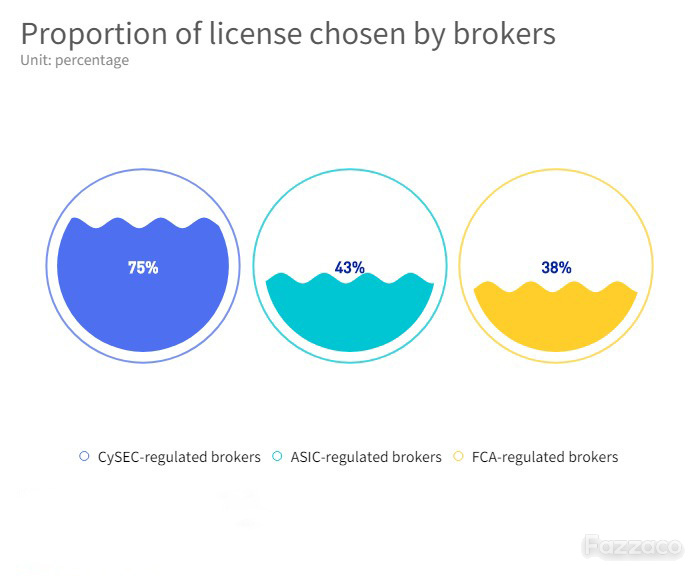
According to fx110.com, Cyprus still ranks the most favorable destination to apply for license in China’s market, followed by Australia, Hong Kong SAR, and Belize.
Note: A broker can be granted more than one license.
75% of brokers have CySEC license
43% of brokers have ASIC license
38% of brokers have FCA license.
However, 13 ASIC-licensed brokers withdrew from mainland China’s market in 2019.
Consistent with brokers’ preference, Cyprus have the most brokers, followed by Australia, the UK, Hong Kong SAR, and Belize.
​
2.2.2 Number of FX brokers
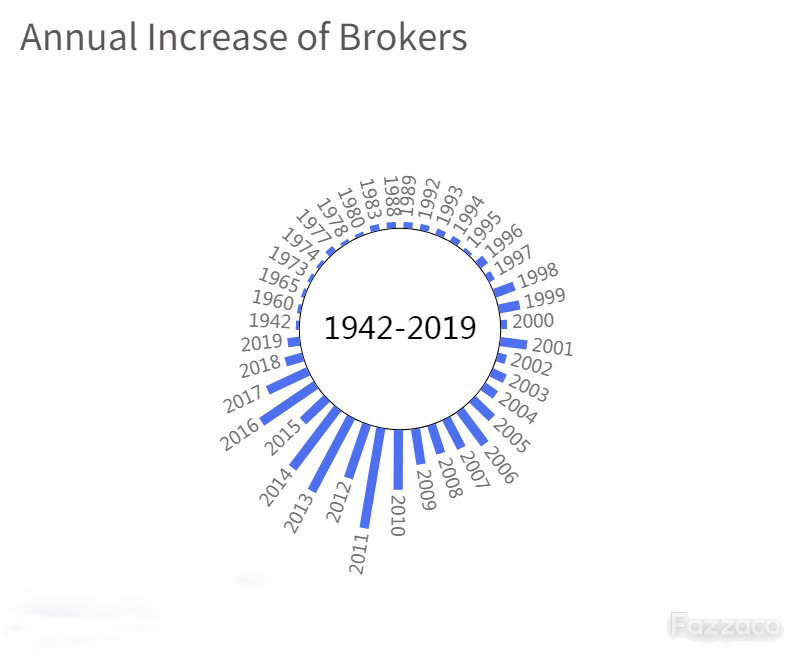
China’s retail FX trading started several decades ago, and the number of compliant brokers kept rising steadily, presumably because China has not lifted its restrictions on the retail FX market.

2.2.3 Is MT4 replaced by MT5?
As a widely-used trading platform developed by MetaQuates, a Russian company, MT4 has dominated the market since it was launched on July 1, 2005. The company also launched MT5 with different functions on June 1, 2010.
MT4 is a flexible trading software that can be used for quote analysis, auto transaction, and testing on the distributive trading system in FX and CFDs while MT5 supports “integrated” transactions in FX, CFDs, futures, options, stocks and bonds. MetaQuates has racked its brain to attract MT4 users to MT5 by adding new functions on MT5, holding promotion activities, increasing MT4 monthly charges and copyright fees, updating MT4. The company even determined to stop the sales of MT4 platform in January, 2019.
So, does MT5 has the same penetration rate as MT4? Will it replace MT4?
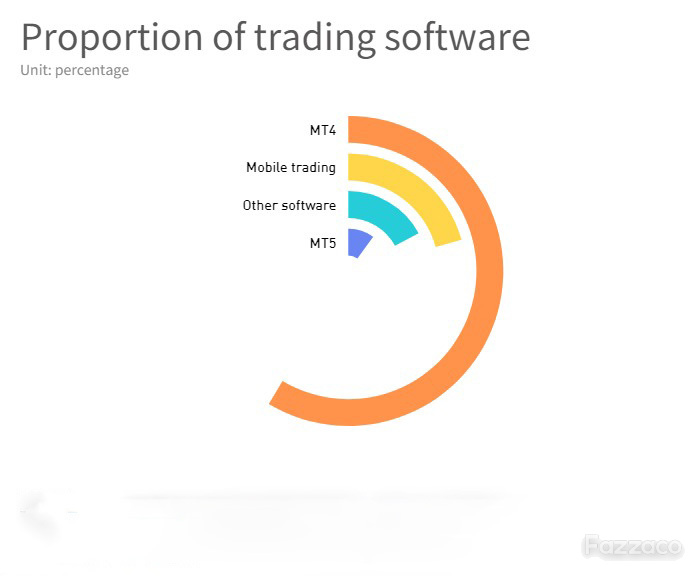
According to fx110.com investigation, 82% of FX brokers adopt MT4, an demonstration of its dominance in the market.
On the contrary, MT5 only accounts for 14%.
23% of brokers provide other software such as CTrader.
On top of that, 29% brokers support FX trading on mobile phones.


2.2.4 Spread type
Brokers providing fixed spreads can maintain stable even in extreme circumstances that may hit the headline on TV.
Variable spreads fluctuate as the market liquidity changes. It may multiply by ten folds or even dozens of folds in a volatile market.
Which type outnumbers the other?
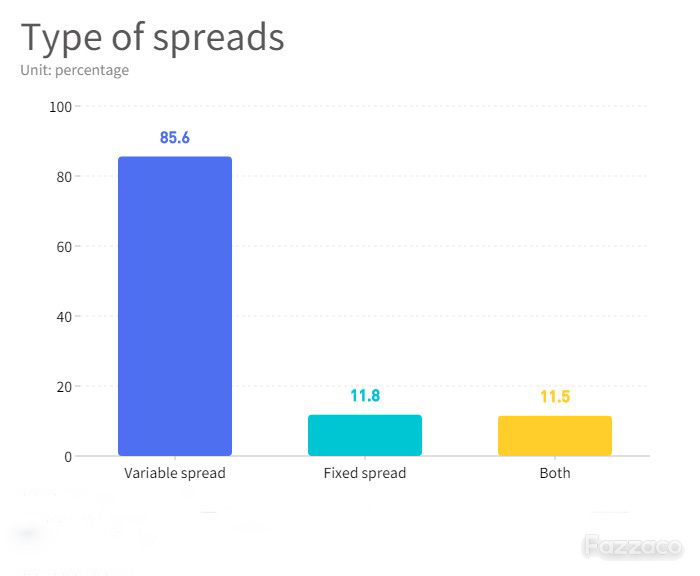
According to fx110.com, 85.6% of brokers provide variable spreads while 6.8% provide fixed spread. 11.5% of brokers provide both.

​
2.2.5 Maximum leverage
Leverage can reflect investors’ preference.
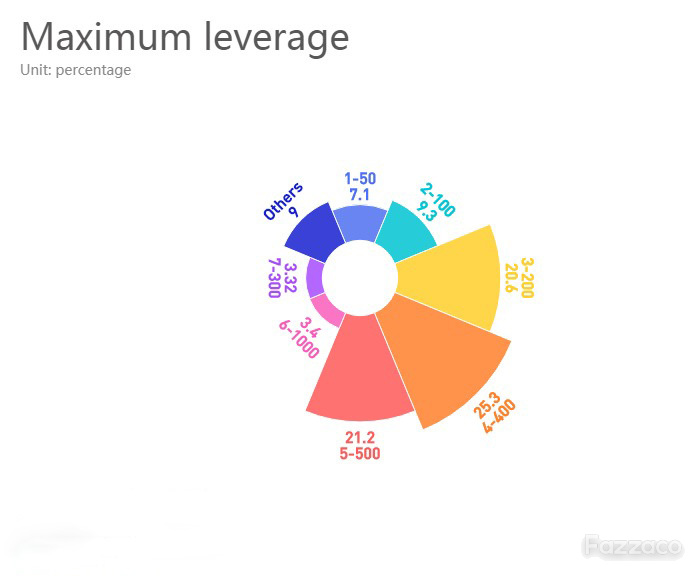
fx110.com statistics show that most brokers provide a maximum leverage of over 100:1.
Among them, brokers providing 4-400 times leverage accounts for 25.3%, followed by brokers providing 5-500 times leverage, accounting for 21.1%, and 3-200 times leverage, accounting for 20.6%. Brokers offering 1-50 times low leverage and 6-1000 times high leverage only take a small proportion.

​
2.3 Operating trend of IBs in China
Introducing brokers bridge investors and brokers, and their development is an barometer of the FX market.
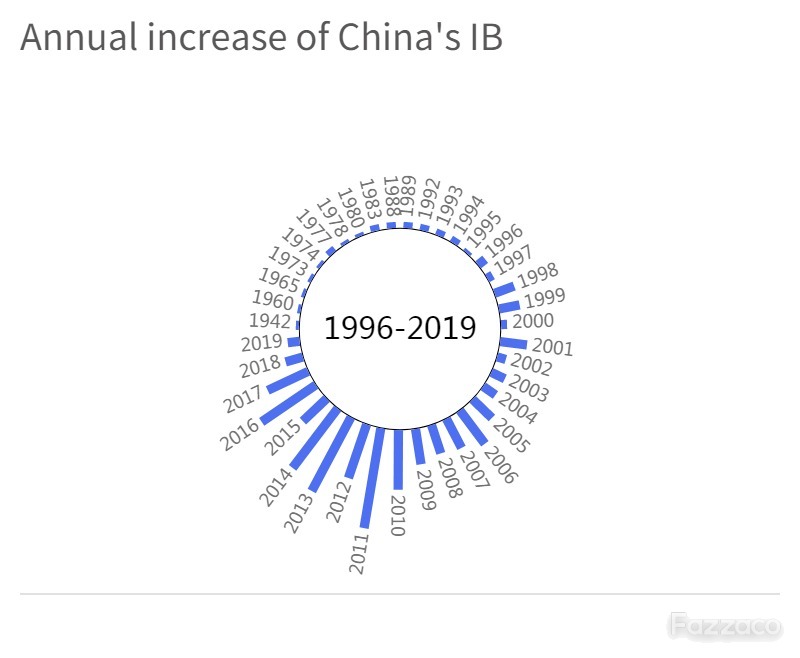
The two oldest IB companies in China were established in 1996, and the industry took off from 2013 to 2018 after growing slowly for several years.
The following chart shows the development of the IB industry.

​
​
2.3.1 Which region has the most IBs?
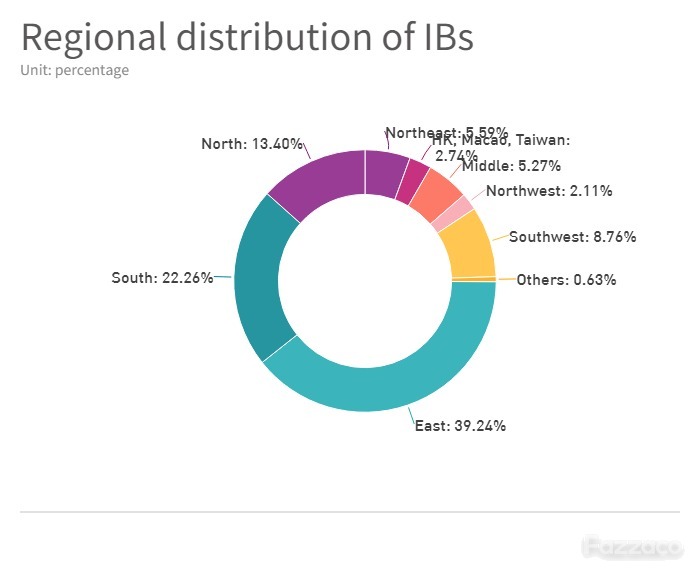
Analysis shows that 37% of IBs are located in East China, particularly in Hangzhou and Shanghai;
21% of IBs are located in Southern China, such as Guangzhou and Shenzhen;
12% of IBs are located in Northern China, such as Beijing and Zhengzhou;
Overall, the distribution of IBs has the same pattern as other financial products: most are located in highly-developed metropolitan cities such as Beijing, Shanghai, and Guangzhou, many in other eastern coastal areas, some in Middle China, and only a few in the west.


2.3.2 What’s the status quo of China’s IBs
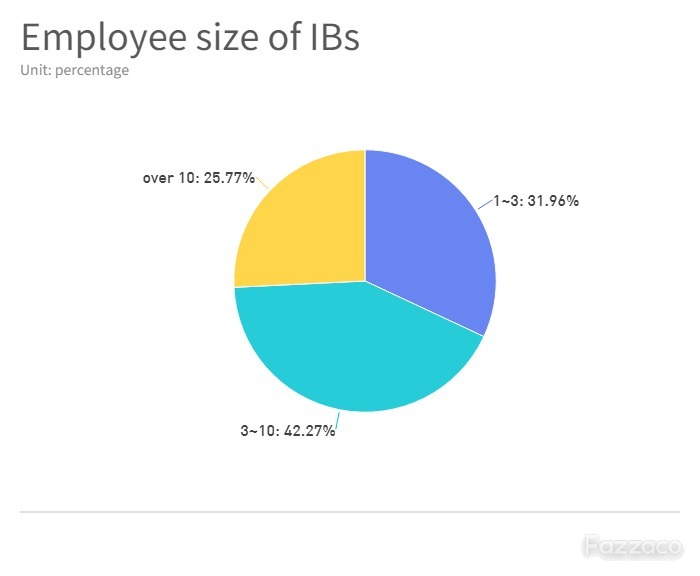
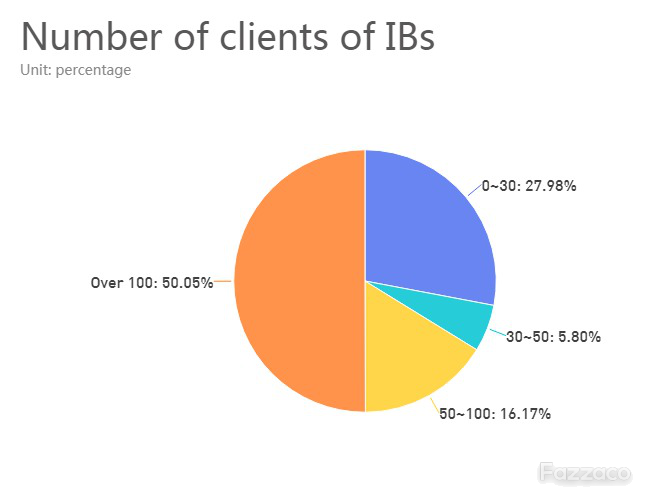
According to statistics of fx110.com, most of IBs are enterprises instead of individuals, and the size of IBs can be judged according to the number of employees and clients.
Questionnaire shows that IBs with less than 3 employees account for 30% , while IBs with 3 to 10 employees account for 40.5%, and only 10% of IBs have more than 10 employees. It can be concluded that small-scale IB operation is very common in China.
Besides, 27.5% of IBs have no more than 20 clients, 5.7% of IBs have 30 to 50 clients, 15.9% have 50 to 100 clients, and 49.2% have more than 100 clients.
The survey also suggests that only half of the IBs are supported by brokers in at least one of the forms such as cash bonus, deposit bonus, salon subsidy, working subsidy, commission, gifts, training, lecture, offline activity, technology indicator, customer service, live teaching, etc. Most of them are developing on their own.


Create Company Page