


Is Fintech Reshaping Finance? - Fintech Series (I)

We are living in a century of internet where numerous new technologies are springing out one after another. Fintech is one of the many. It is a portmanteau, of the terms finance and technology. Just like so many other technologies that emerged in our times, the word fintech has been evolving unknowingly as technologies and markets evolve.
Finance is an ancient business, with the earliest record tracing back to 3,000 BC where banking existed in the Babylonian empire, where temples and palaces were used as safe places for the storage of valuables. The history of finance is, in fact, the history of technological innovation. Financial transactions, particularly forex trading, come with intensive information and frequency. Essentially speaking, financial institutions are one of the driving powers as well as direct beneficiaries of technological advancement.

When the term first appeared in the 21st century, fintech was first applied to the technologies employed at the back-end systems of conventional financial institutions. However, there has been a shift to more consumer-oriented services since then, and now fintech usually includes various sectors, such as education, payment, consulting, retail investment management, data analysis and blockchain, something that has been sensational these years. Forex in particular, has involved multiple sectors, including but not limited to bridging, CRM, white labeling, liquidity, payment, licensing, trading software and platform infrastructure etc.
As fintech advances, people are looking forward to a game-changing financial landscape and even hoping to overthrow the entire traditional finance with innovative technologies, improve customer experience, build eco-system, and make financial services a built-in part in life.
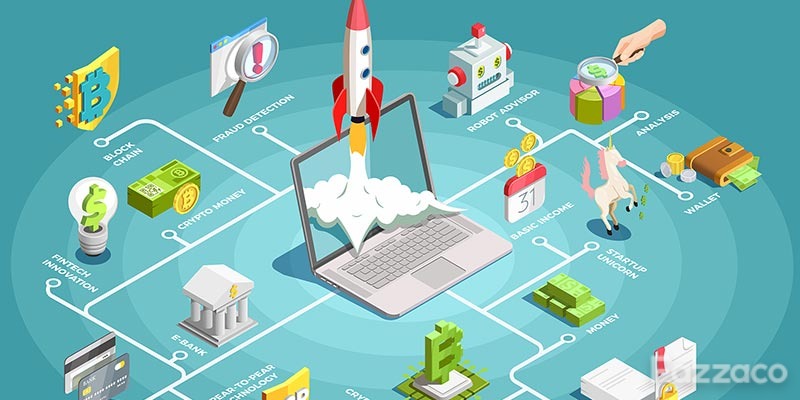
We are not talking about simply having some technologies like a system or a set of software, but about using technologies for relevant and your core businesses. Just like a car dealer might have thousands of cars in stock, but it is not an auto company, because they cannot manufacture even one single car. Vehicle manufacturing is the core business of auto companies. So, the same idea applies to fintech as well. It doesn't make you a fintech firm just because you can build a website or make a mobile app. Therefore, fintech is more inclined to the tech part instead of the fin part.
So, as the financial booster, will fintech bring essential changes to the business?
Well, the answer is no. The relationship between the two determines that fintech is still unable to change finance essentially, which is still about managing risks, matching the demands and supply of funds. For example, it has been millions of years since the appearance of first humans, but modern people are not that different from primitive men biologically. In the eyes of an assumed highly developed extraterrestrial civilization, our missiles are simply arrows that travel faster.
The first Industrial Revolution innovated how we produced and manufactured, and we shifted from hand production to machines, marked by the invention and application of machines. The second Industrial Revolution, marked by the invention of incandescent light bulb, was an era of massive electrification. Humans no longer had to live through lightless nights. The ongoing third Industrial Revolution brought us automated computation, which greatly improved productive forces. Relativity and quantum physics deepened our understanding of materials. The use of nuclear power not only provides us with massive energy, and it casts a deadly shadow on all of us too.

Therefore, the reason we say that Industrial Revolutions have reshaped us is because they have changed human society in a fundamental way. But when we speak of fintech, the changes it brought to finance are far from enough to trigger a qualitative change. What fintech is doing is more about having better efficiency, namely lessening repetitive or mechanical work with automation; lowering operational cost with fine management; and forecasting market trends and locating leads more accurately with data analysis etc. In forex brokerage, in particular, compliance and regulation are crucial. Regulatory technologies, or regtech, make compliance not a pain in the neck again. Thanks to AI and machine-learning, the algorithms simplify compliance processes through coding, and filter out the latest laws in a highly-efficient manner, while ensuring the transparency and consistency of regulatory reporting. As a result, workload is reduced greatly, and reliance on manual work is relieved, not to mention minimized risks of errors or deviations.
Of course, one should never underestimate how far technologies can take us. With the rapid development of AI and machine learning, perhaps some unimaginable yet radical changes to all industries, including finance, are waiting for us in the future.

 Subscribe Now