


Is Social Trading the Future of Investment?

Social trading segment is prospering, as corresponding trading solutions and and platforms are emerging to cater to retail investors' increasing demand. Over the last few months, multiple financial firms, including Germany-based bank comdirect, Brokeree Solutions, the technology provider for multi-asset brokers and Vantage, the multi-asset trading platfrom, have launched new social trading offerings successively.
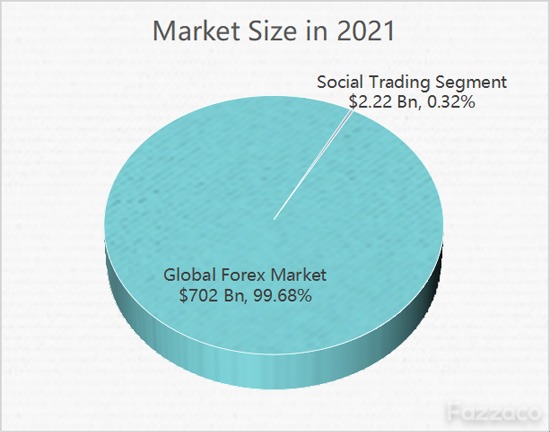
The segment's market size is expected to grow from $2.22 billion in 2021 to $3.77 billion by 2028; and it is estimated to rise at a CAGR of 7.8% between 2021 and 2028 (statistics from The Insight Partners). And in 2021, the global forex market reached a value of $702 billion (statistics from MarketWatch).
What Is Social Trading?
Social trading, which may also be referred to as "copy trading", is a form of investing that enables traders to observe the trading behavior of both their peers and expert investors, and mimic their trading strategies. This trading model connects traders around the world, and provide them with a community to interact with and learn from each other.
Key Players
When it comes to a top-rated social trading broker, and a social investment network favored by traders, eToro takes the lead in the industry. Its registered users totaled 28.5 million as of March 2022.
Other significant market players include ZuluTrade, NAGA, Darwinex, TickMill, Collective2, FX Junction, Wikifolio, Axiory, and AvaTrade.
Let's take a closer look at eToro. The broker launched OpenBook in July, 2010, the world's first social trading platform, which was phased out in 2015. Two years later, it launched CopyTrader™, with which you can automatically copy top-performing traders, instantly replicating their trading in your own portfolio. With this tool, the minimum deposit required is $200, with the maximum deposit of $2,000,000; the maximum number of traders you can copy simultaneously is 100. Besides, its users made a 30.4% return on investment (ROI) by copying pro traders last year, compared to that of 2020 at 83.7%.
Strengths
1. Reduce knowledge gap and draw to novice traders
A social trading platform is newbie-friendly, offering novice traders the opportunity to join a community of like-minded individuals where advice, knowledge, information and ideas can be freely exchanged. This trading model helps alleviate one of the greatest difficulties facing new traders: the knowledge gap, to a certain extent. It therefore draws to a flood of new individuals to enter the financial market, which in turn facilitates client acquisition for brokers.
2. Enhance customer retention
Once an existing trader finds himself in a role with a certain number of followers in the network, and profiting from it, he will continue choosing the platform to carry out trading activities and will not easily give up what he has gained. This is conducive to reducing the client loss ratio and raising the customer retention rate for brokerage firms.
3. Incentivise expert players
In order to attract and retain experienced traders, social trading platforms usually offer some incentives, including waiving trading fees, setting a profit sharing mechanism. Traders with a good track-record often appeal to a lot of newbies to track their moves, and replicate their portfolios and trading activity, which will bring them some benefits. Meanwhile, this also will motivate experienced traders to focus on improving their professional trading skills.
4. Help boost trading volumes for brokers
When an experienced trader opens a position in a social trading community, all followers will open the same position almost simultaneously. This will definitely help boost trading volumes for brokers.
Weaknesses
1. "Herd mentality"
Without adequate professional trading knowledge and skills, many newbies tend to directly replicate the trading positions of their peers. To make a profit, the premise is that you can find a trading master, during which their only criterion in most cases is to choose the one with the most followers. This is somewhat similar to how we tend to select the most sold product on shopping sites. Therefore, this "herd mentality" leads traders to choose the reliable trading master and strategy within a limited range.
2. Deviations
All new retail investors should bear in mind that past success is no guarantee of future success, as the forex market is fast changing, and the high earning performance of an experienced trader only demonstrates their bright past.
3. Overreliance
No background in finance needed, just an internet connection, to engage in trading activities though, social trading has been critisized for creating overreliance on experienced traders among novices.
Growing Importance
Be that as it may, the benefits of social trading still outweigh its limitations. This trading model provides clear advantages for both retail and professional investors, and brokers as well. It brings a new way of analyzing financial data to trading, which is by comparing and copying the trades, techniques and strategies of experienced investors.
Furthermore, social trading could yield insight into market mentality and momentum, since in the network investors' investment decisions and performance are transparent. In the future, professional investors could turn to social trading platforms to mine for information on market sentiment. The huge amounts of data and views being shared will only rise as these platforms become more popular. All this could cause social trading platforms to be the first point of contact for those wishing to understand the financial market.
 Subscribe Now