


itexsys: MT4/MT5 White Labels, Hosting and Broker Technology
itexsys provides technology and managed services for FX and CFD brokerages, with MetaTrader 4 and MetaTrader 5 white label platforms at the center of its offering. Its service connects the customer trading platform with hosting, technical support, liquidity-provider connectivity and CRM integration. The company describes itself as an independent technology provider rather than a broker or liquidity provider, and states that it does not hold client money.
For a brokerage, that role is relevant because the trading terminal is only one part of the operating environment. Accounts, trading conditions, customer records and infrastructure need to work together throughout the service lifecycle. itexsys positions its white label offering around helping an operator establish that environment, run it with technical support and eventually migrate to its own MetaTrader license when the business requires a different ownership model.
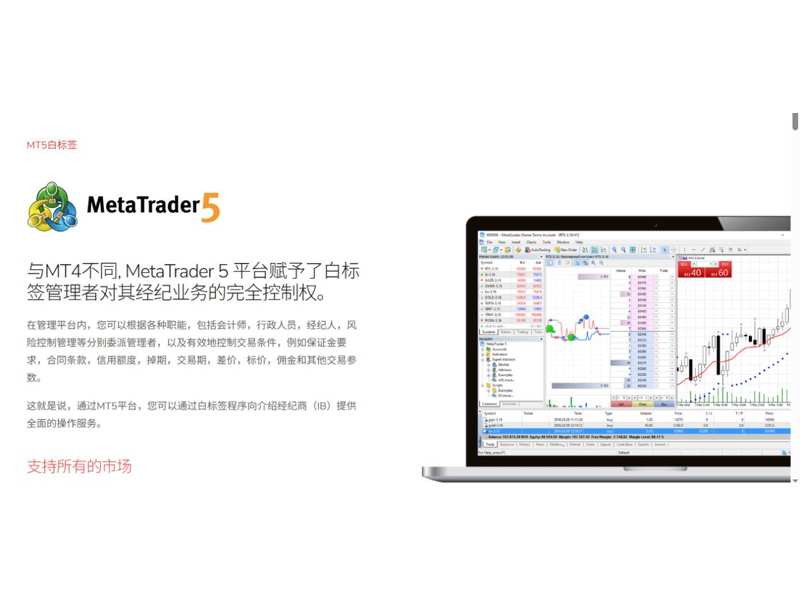
itexsys MT5 white label product page. Source: itexsys.
A managed route to a branded MetaTrader service
The white label model allows a broker to offer a branded MetaTrader service while using a provider’s supporting platform environment. itexsys presents both MT4 and MT5 within this model, alongside fully managed services. The commercial proposition is therefore broader than distributing a terminal: it includes the technical work required to make the brokerage’s selected configuration available to its customers.
The resulting service still needs a defined operating model. A broker decides which customers it serves, how accounts are organized and which trading conditions belong to each offering. The technology provider supports the infrastructure and platform implementation. Clarifying those responsibilities at the beginning makes the relationship easier to manage as the brokerage adds staff, instruments or additional customer groups.
A useful project brief begins with the actual customer journey. It sets out how a person registers, receives a trading account, funds it and accesses the terminal. The same brief should describe the employee actions behind each stage. This connects the branded interface with the administrative work needed to maintain accurate account information and respond to customer questions.
MT5 account roles and trading-condition configuration
In its MT5 presentation, itexsys describes role-based access for accounting, administration, dealing and risk-management functions. It also describes control over trading parameters such as margin requirements, contract settings, credit limits, swaps, trading sessions, spreads, markups and commissions. These functions give the brokerage several layers of configuration rather than a single uniform service for every account.
The operational significance is the relationship between permissions and decisions. An accounting employee may need account information for reconciliation, while a dealer works with trading conditions and exposure. Assigning access according to the task helps the brokerage organize those workflows. The implementation should make clear which actions employees can perform and who is responsible for reviewing changes that affect customers.
Trading parameters also need to be considered together. A change to a contract specification can affect how an order is displayed, how margin is calculated and how a position appears in reporting. A practical demonstration should therefore follow a representative order through the customer terminal and the management environment. This makes the proposed settings easier to assess than reviewing a list of individual controls in isolation.
Trading tools across desktop, web and mobile
itexsys includes desktop platforms, mobile access and a web terminal in its brokerage offering. Its website describes web access for MT4 and MT5 users without an additional software download, while mobile applications support account access and trading away from a desktop. The deployment plan should connect these channels to the same intended account service and customer-support process.
The MT5 material also describes depth of market and a strategy tester. The former presents price information relevant to the available market configuration; the latter uses historical prices to simulate a trading algorithm’s behavior. They address different needs within the terminal. Access to a testing tool should not be presented as evidence that a strategy will reproduce the same result in live trading.
For a broker, channel consistency is a concrete design requirement. Customers should recognize the account they are using and understand where to find history, positions and trading conditions. Testing a login, an order and an account-history query across the selected channels gives the brokerage a practical way to prepare support instructions and identify configuration issues before rollout.
Hosting and connectivity as part of the service
The company’s hosting page describes servers in Equinix LD4 in London and NY4 in New York, with access to additional locations through its hosting partner Beeks. It also discusses cross-connects to liquidity providers and a separate VPS offering. These are elements of the infrastructure design described by the supplier; the specific locations and connections included in a deployment belong in the project’s service specification.
Data-center proximity is relevant to the path between trading infrastructure and connected services. It does not, by itself, determine the complete experience for every customer. Client access networks, the selected provider connection and the platform configuration all form part of the operating path. A brokerage can use representative locations and workloads when agreeing how the deployed environment will be measured.
Platform hosting and a trader’s VPS serve different purposes. The first supports the broker’s trading service. A VPS can provide an environment in which a customer runs terminal software or an automated strategy. Keeping those responsibilities separate makes support routing clearer: a terminal process on a customer’s virtual server and the brokerage’s hosted platform are distinct parts of the overall setup.
Liquidity-provider choice and technology integration
itexsys presents its independent technology-provider role as a way for brokers to choose a liquidity provider suited to their business. Its offering includes connectivity rather than a claim that it supplies the underlying liquidity itself. The broker’s choice of counterparty and the technical route used to reach that counterparty should therefore be treated as related but separate decisions.
During implementation, the relevant questions include which instruments are connected, how their identifiers map between systems and which account configurations use the connection. Commercial terms, supported products and operational responsibilities need to agree with the technical setup. A working connection is one component of that relationship, alongside the arrangements between the brokerage and its selected provider.
For an existing operator adding a new service, a staged rollout can make the changes easier to manage. The team can define a representative set of instruments, exercise account and order workflows and compare the resulting records across the connected systems. This turns a general requirement for connectivity into a specific implementation scope that dealers, administrators and support staff can review together.
CRM integration around the client lifecycle
The CRM page describes a choice of systems through selected partners and the possibility of integrating a broker’s existing CRM. The related services include website creation, registration forms, KYC, payments, introducing-broker systems and content management. This is a partner-and-integration approach: the chosen CRM and supporting modules should be identified explicitly in the deployment rather than assumed to be one proprietary package.
The client lifecycle gives these integrations a common purpose. Registration information needs to reach the appropriate record; account creation needs to correspond to the intended trading service; funding activity needs to be reflected in the relevant systems. Customer-service employees then need enough context to explain account status and route issues to the team responsible for resolving them.
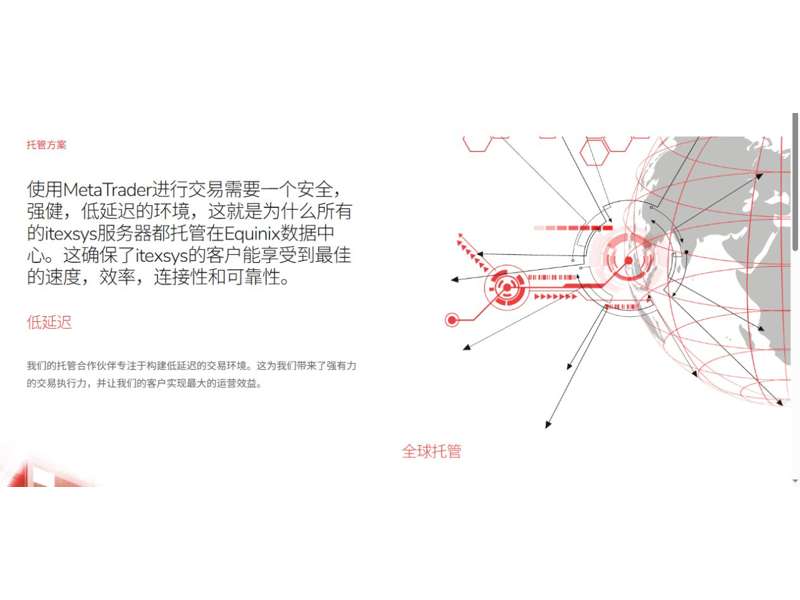
itexsys hosting solution. Source: itexsys.
| Service area | Role in the operating environment | Configuration focus |
|---|---|---|
| MT4/MT5 white label | Branded customer trading service | Accounts, instruments and trading conditions |
| Management access | Employee administration and dealing workflows | Roles, permissions and change responsibilities |
| Hosting | Infrastructure supporting the platform | Location, connectivity and support scope |
| CRM integration | Customer records and onboarding processes | Data ownership, account mapping and workflow events |
| Migration assistance | Transition toward a broker’s own license | Historical data, account continuity and cutover planning |
A broker keeping an existing CRM can begin with the records and actions that must remain continuous. That may include customer identifiers, account references and employee ownership of a case. Defining those relationships helps the project team decide what needs to move between systems and how exceptions should be handled during daily operations.
Technical support and the path to an own-license setup
Managed services remain relevant after launch. The platform becomes part of a recurring operational process in which staff request configuration changes, investigate account questions and coordinate with external providers. A useful support arrangement identifies the reporting channel, the information needed to investigate an issue and the responsibilities of the broker and the service provider.
itexsys also states that it can help clients migrate historical data from its white label environment to their own MT4 or MT5 license. This provides a stated transition path for an operator whose requirements evolve. Migration planning should establish which data will be transferred, how account continuity will be managed and how the cutover will be communicated to employees and customers.
The fit of the itexsys offering is clearest when viewed across that lifecycle. A brokerage can use the service to assemble a branded platform, connect its customer-management processes and obtain support for the underlying environment. Its longer-term relevance depends on how the chosen configuration supports daily operations and how clearly the eventual transition to a different licensing arrangement is planned.
 Subscribe Now

