


Listen to the Article: Copy Trading Under Scrutiny! ESMA's Supervisory Briefing Breakdown
Copy trading allows traders to automatically copy the trades of other traders and share their strategies. For those who lack experience or time, it is an extremely convenient way to do investment. In fact, the sheer size of the copy trading market reached $2.2 billion back in 2021. For many brokers, offering copy trading services has become a powerful marketing tool to further expand their client base.
However, where there is popularity in trading, there are compliance risks, and copy trading is no exception. It brings a series of challenges related to appropriateness assessment, information disclosure, product governance, and remunerations. In late March 2023, the European Securities and Markets Authority (ESMA) published a supervisory briefing on copy trading services, as part of MiFID 2, aiming to raise the regulatory standards and consistency of copy trading services.
So, how important is this briefing? What impact will it have on the market, especially in countries within the jurisdiction of MiFID 2? Is the copy trading market still thriving in the year of 2023? How will affected brokers react to the challenges? These are the topics we will explore.
What Makes Copy Trading (or Social Trading) Popular?
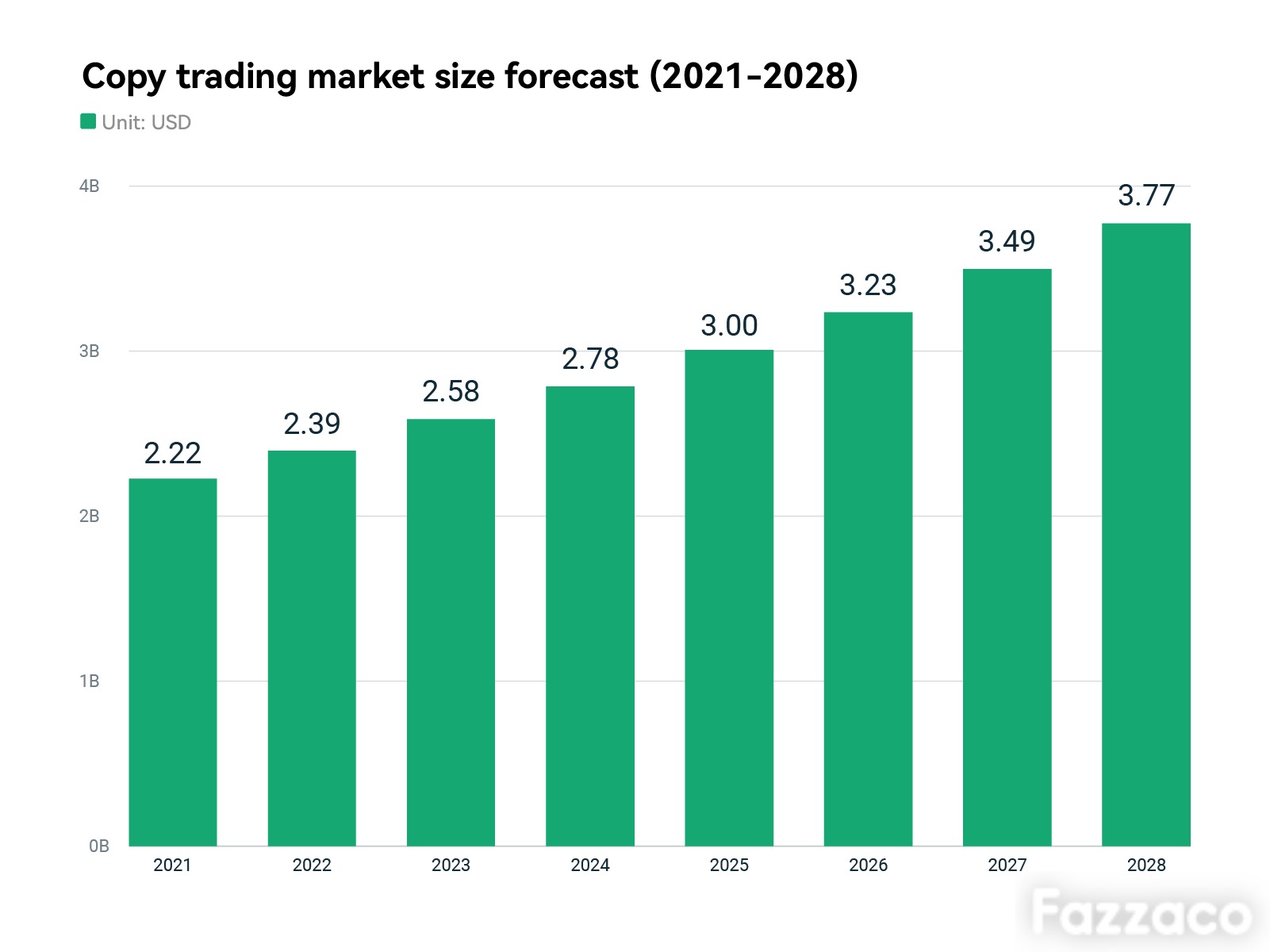
While technically social trading and copy trading are two different things, in most cases their meanings overlap, so in this article we will use the terms interchangeably. Copy trading has been around since the 2010s, but the COVID-19 pandemic in 2020 was actually a significant driver in its popularity. According to data, the market size reached $2.2 billion in 2021, and is expected to reach $3.77 billion by 2028, with a compound annual growth rate (CAGR) of 7.8%. In 2021 alone, Fazzaco reported that brokers such as Forex.com, Admirals, Axi, TD Ameritrade, and CFI had started to offer or expand their copy trading services. And at the end of 2022, the cTrader desktop platform also released an update that included copy trading functionality.
In this hot market, brokers are also confident. OneRoyal stated at the Fazzaco Dubai Expo last year that social trading and copy trading will be the future trend, as more and more people will choose to invest and trade as the middle class grows in emerging countries. And what this growing investment community needs is an easy-to-manage method like copy trading.
For brokers, providing copy trading first and foremost enhances clients' loyalty to the platform: once they start following specific professionas, their likelihood of switching to other platforms decreases. Secondly, offering copy trading can also help brokers increase platform trading volume. Finally, copy trading can be done at any time, allowing brokers to obtain active trading volume outside of trading hours.
ESMA's Latest Supervisory Briefing Explained
In its latest supervisory briefing, ESMA requires companies offering copy-trading services to comply with MiFID 2 regulations. This includes several key points:
· Information requirements: Brokers must provide clear, impartial, and non-misleading information to their clients, including marketing communications, costs and charges, risk warnings, and disclosure of any outsourcing relationships and the qualifications of the outsourcing party.
· Product governance: Brokers must comply with product governance obligations to ensure that copy-trading services are suitable for the target market, and must periodically review their performance and risks.
· Appropriateness assessment: Brokers must conduct a suitability assessment of their clients to determine whether they have sufficient knowledge, experience, and risk tolerance to participate in copy-trading services, and must provide appropriate warnings.
· Remuneration and inducement: Brokers must avoid setting remuneration or inducement mechanisms that could affect clients' interests or cause conflicts of interest, and must disclose any remuneration or inducement received from or charged to clients.
· Qualifications of copied traders: Brokers must ensure that the copied traders have the appropriate qualifications and comply with relevant laws and regulations.
Of particular importance is the disclosure of outsourcing relationships. Many brokers outsource their copy trading services to third-party providers, such as Pelican Trading in the UK (a copy-trading technology solution provider regulated by the FCA), or offer the services internally or through other providers. Therefore, brokers must disclose whether they have outsourcing relationships and whether the outsourcing parties have the necessary qualifications, to prevent them from shifting responsibility to the outsourcing party in case of problems and claiming that they are merely the platform where trades are executed and that the service is provided by third-party managers - a situation where blame is passed on has occurred in the past.
What Choices Do Affected Brokers Have?
In response to ESMA's briefing, brokers face two options. The first is to improve their compliance level by partnering with qualified third-party providers or internally offering copy trading services, while fully disclosing relevant information to clients and regulators. The second is to turn to offshore regulation, ceasing to provide services to European clients. The industry typically adopts the latter option.
Regardless of the chosen path, brokers must carefully weigh the pros and cons, considering factors such as their business model, client needs, and cost-benefit analysis. For brokers capable and willing to enhance their compliance level, complying with ESMA's regulatory requirements can protect clients' interests, enhance their reputation and competitiveness. For brokers unable to do so, turning to offshore regulation can reduce costs and risks, but may also lead to the loss of some European clients. Therefore, brokers should closely monitor the regulatory dynamics of ESMA and National Competent Authorities (NCA), adjusting their copy trading services promptly to adapt to market changes and client needs.
 Subscribe Now