


Listen to the Article: When "Liquidity" Is Too Much - Crypto Events Meet A Flooded Dubai
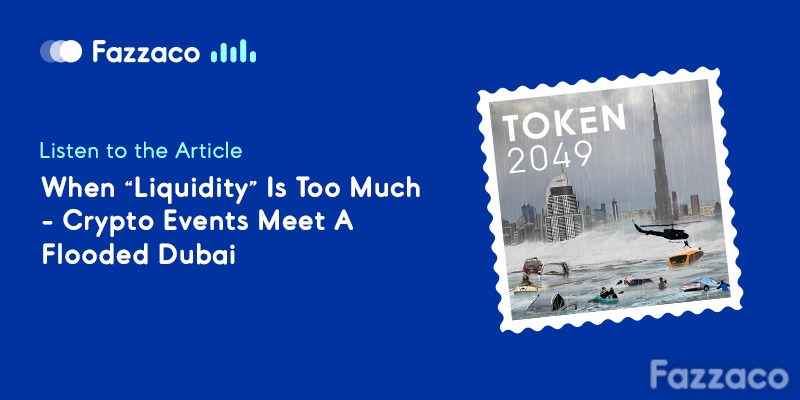
In the middle of April 2024, several high-profile cryptocurrency events took place in Dubai. Among the most notable were Token2049 and Blockchain Life. Typically, April is often a time in Dubai where the weather is milder, and this Middle Eastern city is usually known for its infamous scorching heat of a sun-drenched climate.
Yet, in a twist that caught everyone off guard, tens of thousands of global crypto aficionados found themselves facing an unprecedented flood in Dubai.
Frustrations Flood In with the Waters
First off, let's peek at some snippets from the X platform, where traders and influencers vented their dismay:
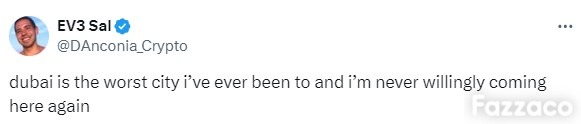
"Dubai is the worst city I've ever been to and I'm never willingly coming here again." @DAnconia_Crypto
"Willing to pay $500-1000 USD for a ride from DXB to Palm Jumeirah." @youfadedwealth

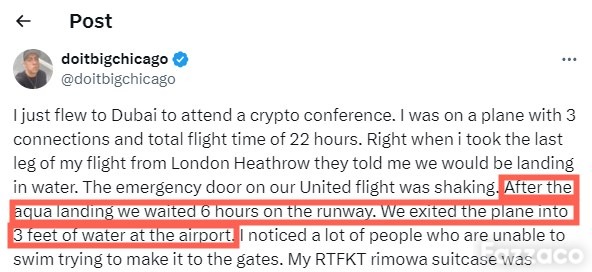
"After the aqua landing, we waited 6 hours on the runway. We exited the plane into 3 feet of water at the airport." @doitbigchicago
So, how bad was this storm that poured on Dubai, or the UAE as a whole? Climatologists estimated that on Tuesday (April 16), the UAE region received an amount of rain in just a few hours equivalent to one and a half years' worth of rainfall. Neighboring Oman also suffered from the flood.
By the evening of April 16, Dubai's precipitation reached 142mm, flooding this international financial center with millions of residents. Social media was in a panic, with many blaming the UAE's irresponsible cloud seeding for causing extreme climate disasters in the gulf area, a view denied by UAE officials.
We won't delve into whether these cloud seeding statements are true, nor can we verify the authenticity of the complaints made by traders on social media. But we did indeed see that many participants of the crypto events couldn't find transportation, flights were delayed, and some hotel rooms even had water flowing into them. Some attendees reported waiting over 10 hours for taxis from the airport, with roads between Marina and Downtown completely submerged. The Metro couldn't operate, and Ubers were stuck on the streets. Some even paid up to 1,000 AEDs for taxi fares. These all reflect the inadequacy of Dubai's infrastructure behind its glamorous skyline.
Who Ever Said Dubai Was Lacking in Liquidity? - The "Liquidity" Jokes That Got Outta Control
Regarding the flood in Dubai, "liquidity" jokes seemed to be hotter than the crypto events themselves. Cointelegraph posted a video on X, showing many booths with water over the ankles on the floor. The tweet read, "Who ever said Dubai was lacking in liquidity?" as market liquidity has always been a key topic of interest in the crypto community.

In addition to the "liquidity" puns, many who dislike crypto influencers posted even darker jokes:
"You cannot tell me God isn't real when a bunch of Crypto twitters finest go to Dubai only to be met with a biblical flood..." (@BustedStops)

And more pointedly, some critics of cryptocurrency penned, "It is difficult not to feel a sense of schadenfreude, not for the property damage and distress caused by increasingly erratic weather across the globe, but because initiatives like cryptocurrency are a step backward for human-influenced climate change."
Cryptocurrency's Climate Conundrum
The UAE's flood impacted numerous financial events, yet none were postponed or canceled—except, notably, the crypto gatherings, which became the butt of the joke. This scorn is rooted in the crypto industry's perceived environmental toll.
Consider Bitcoin: a non-tangible series of complex codes birthed from ceaseless computer calculations known as mining. The energy consumption of mining is notorious; UN data from 2021 highlighted the stark contrast between a Mastercard transaction's 0.0006 kWh and a Bitcoin transaction's 980 kWh—the latter could power a Canadian household for three weeks.
For environmentalists, cryptocurrencies inherently contribute to environmental degradation and are complicit in the global climate crisis.
For the crypto community, the flood and ensuing liquidity jokes may offer a more obvious lesson: whether it's an industry or a city, if the infrastructure is not robust enough to attract excessive liquidity, then the industry or city cannot sustain it and will only be overwhelmed.
 Subscribe Now