

Norwegian Regulator Alarms Consumers against Cryptocurrency
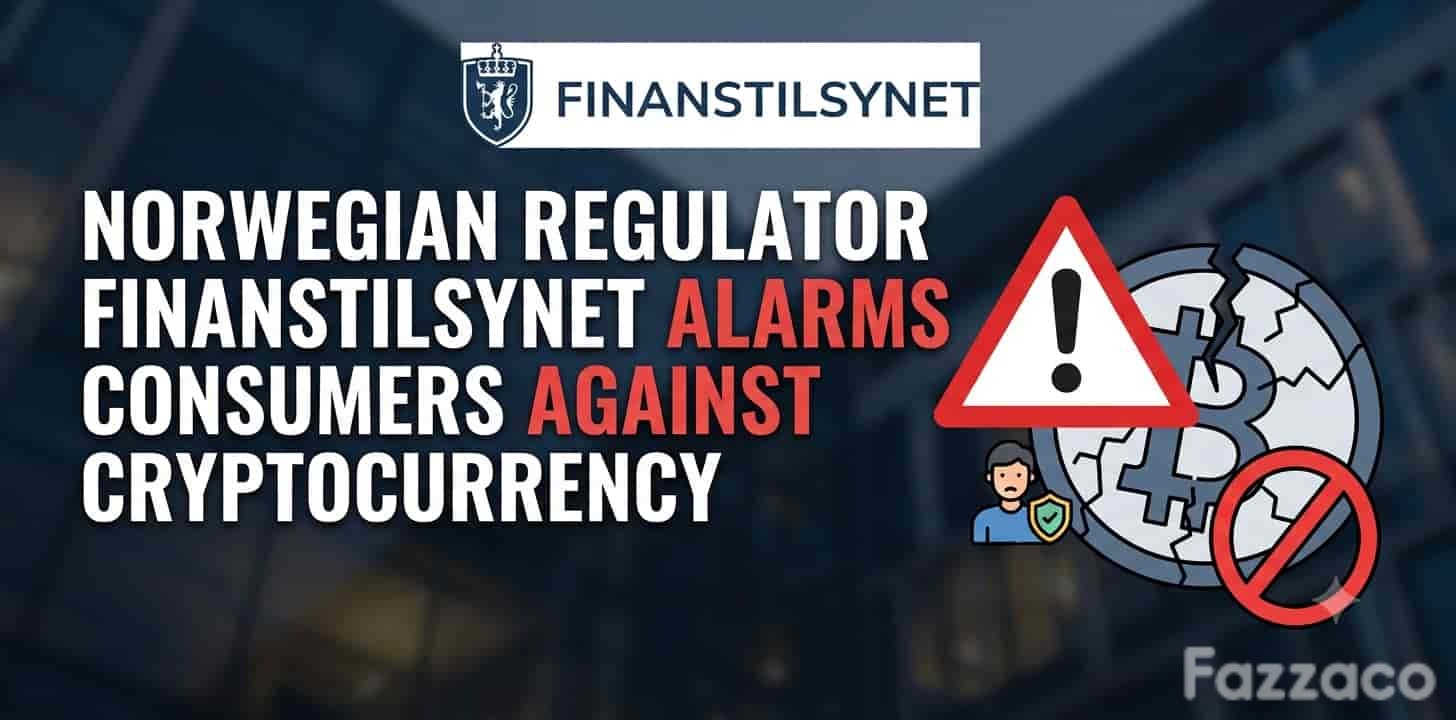
The cryptocurrency market continues to experience high volatility, drawing increasing attention from global regulators. Norway’s Financial Supervisory Authority (Finanstilsynet) has once again issued a warning to investors, emphasizing that crypto assets carry significant risks and should be approached with caution.
1. What Is the Norwegian FSA (Finanstilsynet)?
Finanstilsynet is the national financial supervisory authority of Norway, responsible for overseeing banks, insurance companies, securities markets, and financial technology firms to ensure compliance and financial stability.
Its core responsibilities include:
Maintaining financial market stability
Protecting investor interests
Preventing systemic financial risks
In the cryptocurrency sector, the authority has consistently maintained a cautious regulatory stance.
2. Key Points of the Latest Crypto Risk Warning
The regulator highlighted several major risks associated with cryptocurrency investments:
Extreme price volatility
Lack of effective regulatory protection
Potential for significant financial losses
Limited transparency from some trading platforms
Finanstilsynet emphasized that crypto assets are not comparable to traditional financial instruments such as stocks or funds in terms of risk structure.
3. Why Regulators Remain Concerned About Crypto Markets
1. Lack of Unified Global Regulation
The cryptocurrency market lacks a standardized global regulatory framework, with significant differences across jurisdictions.
2. Strong Speculative Nature
Crypto prices are often driven by sentiment and liquidity rather than fundamental value.
3. High Risk of Fraud and Market Manipulation
Issues such as fake projects, Ponzi schemes, and price manipulation remain common in the industry.
4. Main Risks of Cryptocurrency Investment
4.1 Extreme Price Volatility
Major cryptocurrencies such as Bitcoin can experience price fluctuations of 10%–30% within a short period.
4.2 Regulatory Uncertainty
Changes in government policies may directly impact market legality and liquidity.
4.3 Exchange Security and Hacking Risks
Some trading platforms face risks of cyberattacks and fund theft.
4.4 Lack of Investor Protection
Unlike traditional banking or securities markets, crypto assets often lack formal compensation mechanisms.
5. Global Regulatory Trends
In addition to Norway, many jurisdictions are strengthening crypto regulation:
The EU is implementing the MiCA (Markets in Crypto-Assets Regulation)
The UK is tightening advertising and compliance rules
The United States is increasing oversight of crypto exchanges
The overall trend is clear: regulation is shifting from a loose framework toward structured compliance.
6. How Investors Can Reduce Risk
Avoid overexposure to cryptocurrencies
Use regulated and compliant exchanges
Do not chase market hype
Diversify investment portfolios
Stay informed about regulatory changes
7. Conclusion: A Call for Rational Investment
The warning from Norway’s FSA highlights once again that the cryptocurrency market remains highly risky. While digital assets offer innovation potential, investors must fully understand their volatility and uncertainty.
In the context of tightening global regulation, rational investing and effective risk management remain essential principles.
 Subscribe Now