


Payments around the World - Mainland China

Unlike most countries in the world, the payment market in mainland China (China hereinafter) jumped straight from cash to mobile payment, skipping the middle phase, credit card / personal check, which have always been sporadic, if never non-existent in this country. Personal check payment, in particular, has never been a visible part of the market.
More than half of the transactions in China are made mobile. Two giants, Alipay and WeChat Pay account for 93% of the market share, while over 300 licensed non-banking PSPs have to share the remaining 7%.
With such particularity, commercial institutions, including financial institutions, have to employ gateways that conform to the payment habits of Chinese investors / consumers in order to be truly connected to the mainland China's market.
Payment Landscape in China is Largely Mobile
At present, the majority of payment landscape in China happens with the consumer scanning the merchant's QR code with the smartphone to transfer the fund. But before that, Chinese people were relying heavily on cash. Thanks to the rapid economic growth in mainland China and the rise of e-commerce in recent years, driven by tech giants such as Alibaba and Tencent, China has become the country with the highest mobile payment percentage in the world.
As early as 2018, before the Covid, the proportion of mobile payment was as high as more than 80%. In 2021, the penetration rate of mobile payment in China reached 87.6%. In 2022, the penetration rate of mobile payment transactions performed through smartphone applications will be 40.4%.
Renminbi - Not Fully Convertible Yet
Although China has been working hard to promote its legal currency, known as Renminbi, to become one of the currencies for international settlement, the Chinese government has always strictly controlled foreign exchange. Therefore, this has always been an obstacle on the road of Renminbi struggling to become more international. At the same time, it is, too, a barrier to overseas capital to enter the market of mainland China.
Despite this, the Chinese government has never given up trying to internationalize Renminbi. Offshore RMB is one of the compromise solutions. It is precisely because of this that there are two abbreviations for the fiat currency. CNY refers to the yuan circulating in China, while CNH refers to the offshore RMB.
Alipay / WeChat Pay Gateways: Key for Online Brokers to Win Traders with A Chinese Background
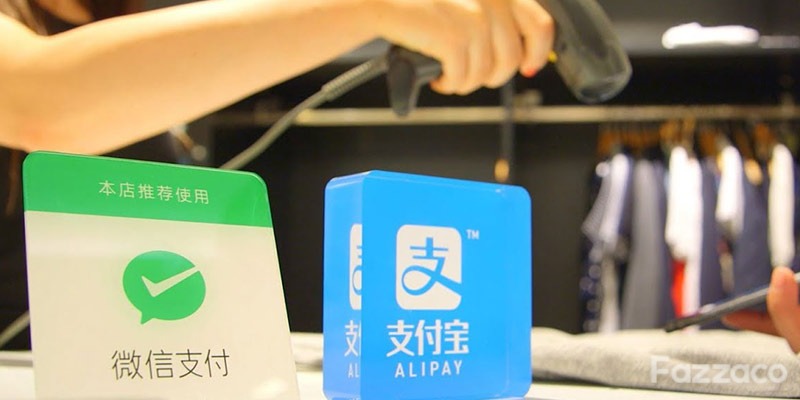
The payment market of China is literally a binary market, belonging to Alibaba's Alipay and Tencent's WeChat Pay respectively, and even Apple Pay finds it challenging to get a slice of the pie. Surveys have shown that more than ninety percent of Chinese people admit that they would be more inclined to an overseas merchant providing these two mainstream payment gateways.
Online forex brokers are faced with both challenges and opportunities amidst the Covid pandemic, yet payment often becomes a missing part of the big picture. Whether for brokers or traders, the importance of payment is self-evident. The convenient and fast payment process brings profits and returns to brokers and investors, and can greatly improve the customer acquisition rate.
In addition to third-party payment gateways such as Alipay/WeChat Pay, China UnionPay is also an important payment gateway. UnionPay has issued nearly 30% of the world's payment cards (credit/debit), and is also the only domestic bank card issuer in mainland China. Therefore, for international merchants, UnionPay is also an indispensable link on the road to acquiring mainland customers.
Crypto Payment in China
Cryptocurrencies have seen their boom in China, and the country was once the world’s largest mining country at one point. Nevertheless, the government took harsh actions against private crypto transactions since the second half of 2021. The central bank, the People's Bank of China, has had talks with a number of banks and non-banking PSPs, including Alipay and WeChat Pay.
Future Trends of Payment and Fintech
In June 2022, China's Central Comprehensively Deepening Reforms Commission passed the Work Plan for Strengthening the Supervision of Large-Scale Payment Platform Enterprises and Promoting the Standardized and Healthy Development of Payments and Fintech. Many industry insiders believe that the Work Plan implies that crackdowns such as the one on Ant Financial (founded by Jack Ma, the former Chairman of Alibaba) will be eased.
The Work Plan points out that it is necessary to bring platform enterprise payment and other financial activities into supervision in accordance with applicable laws and regulations, and that the country should adhere to licensing operations of financial business, and improve the rules and regulations and risk prevention and control system in the payment market. Therefore, in the long run, the Chinese government will still encourage the development of the financial market, and the regulation, including the payment market, will gradually change from a case-by-case approach to a sustainable and institutionalized regulatory framework.
 Subscribe Now