


Retail Traders Are Increasingly Trading Cryptos: What Brokers Should Know?

As unprecedented as 2020 was for the financial markets, 2021 seems even more so. Driven by a perfect storm of high market volatility, stay-at-home orders and extensive stimulus, retail trading reached new heights in 2020. Individual stock trading was at a 10-year high, and from the start of the year to June 2020, retail investors constituted 19.5% of total order flow in the US, compared to 14.9% during the same period in 2019.
Momentum has not just persisted but strengthened in 2021. Trading volumes were up 92%, year over year, in January, having risen 33% from December 2020. And, this isn’t just for stock trading, as some might think. The crypto markets have also seen a huge influx of new retail traders.
Wanna Know How to Reach Our Audience of Millions at Fazzaco?
The trading volumes speak for themselves. The BTC/USD pair has seen average trading volume of $63.28 billion over the three months to May 17, 2021. Bitcoin might be the most popular pair, and we won’t even mention all the Elon Musk-driven frenzy over Dogecoin. But even the ETH/USD and ADA/USD pairs have seen huge average trading volumes of $32.5 billion and $5.86 billion, respectively, for the same three-month period.
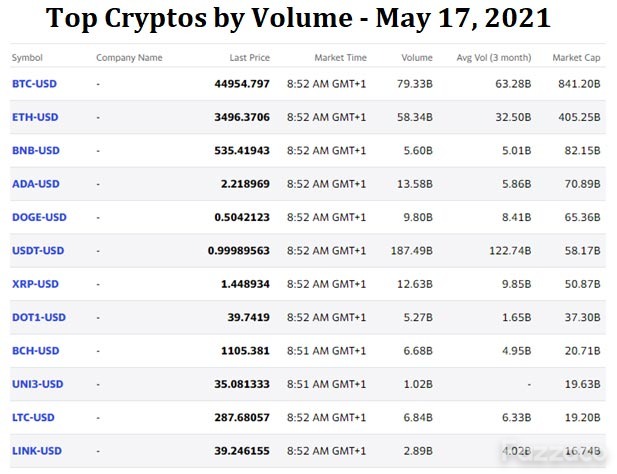 Image Source: Yahoo! Finance
The key reasons to have driven traders to cryptocurrencies include the extensive stimulus measures and loose monetary policies, which have sparked inflation fears in 2021. So, Bitcoin and altcoins like Ethereum gained attention as essential portfolio diversifiers both from retail and institutional investors.
The 2021 Cryptocurrency Trading Frenzy
With Bitcoin’s price temporarily surpassing $60,000 and Ethereum’s price crossing the $4,000 mark for the first time, there has been a renewed surge in crypto trading. Trading volumes jumped to $2.7 trillion in February 2021, at major exchanges, according to data released by CryptoCompare. An interesting fact is that there has been a slowdown in institutional participation in Q1 2021, while retail traders have taken the lead. The number of non-zero wallet addresses grew during the quarter, while those holding over 1,000 BTC fell, as BTC went on to trade at a record high of $64,801.79 on April 14.
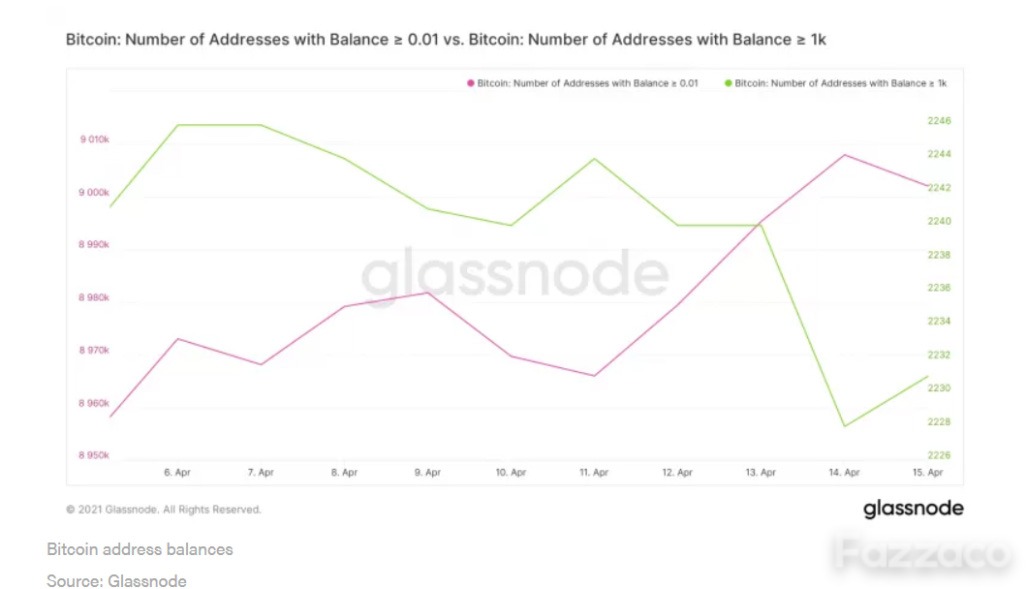
Image Source: glassnode
New investor sign-ups and trading volumes have increased for online brokerages worldwide. eToro, for example, had 61% more unique BTC holders and 49% more Ether holders in January 2021, than it did a year earlier. In just one month, Revolut gained more than 300,000 new crypto investors. Small German broker Lang & Schwarz saw an almost 1,200% rally in its shares in February 2021, fuelled by retail trading in cryptos and Wall Street favourites like Tesla.
With the huge surge in crypto trading, brokers have noticed specific investor trends emerging.
Gen Zs and Millennials Make Up the Bulk of Crypto Traders
Millennials and Generation Z are hugely interested in digital assets and believe in the potential of their underlying technologies. A survey in December 2020 by international financial advisory deVere Group revealed that two-thirds of its millennial clients preferred BTC to gold as a safe-haven investment and inflationary hedge. While BTC emerged as an inflationary hedge, assets like Ether have gained popularity due to their role in Decentralised Finance (DeFi) projects. The success of platforms like Robinhood demonstrates that the “digital native” generations are looking for options beyond traditional brokerage offerings.
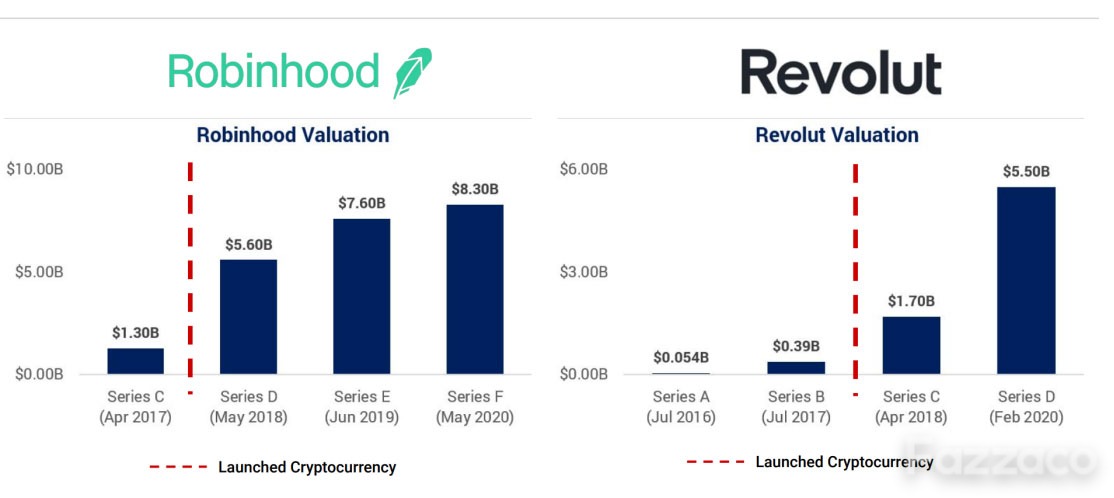
Image Source: Twitter
The 2021 State of US Crypto Report went on to state that today’s average crypto investor is a 38-year-old male who earns $111,000 annually. The report also revealed that 26% of the cryptocurrency holders in the US are women, with an average age of 44. In the UK, 20% of people born between 1981 and 1996 had invested in cryptocurrencies, before they had invested in fiat assets worth £25,000 or more.
Social Media Can Drive the Markets
Dogecoin, the cryptocurrency that started off as a satire, saw a huge rally in April-May 2021. It was driven higher largely by young crypto traders, who didn’t want to miss out on all the buzz generated by Elon Musk’s tweets. The GameStop and AMC stock frenzy was very similar, where a bunch of 20-something Redditors led extreme market movements. Social media communities are where the crypto industry really shines. These communities allow traders to swap tips and strategies, and inform each other of the latest market news.
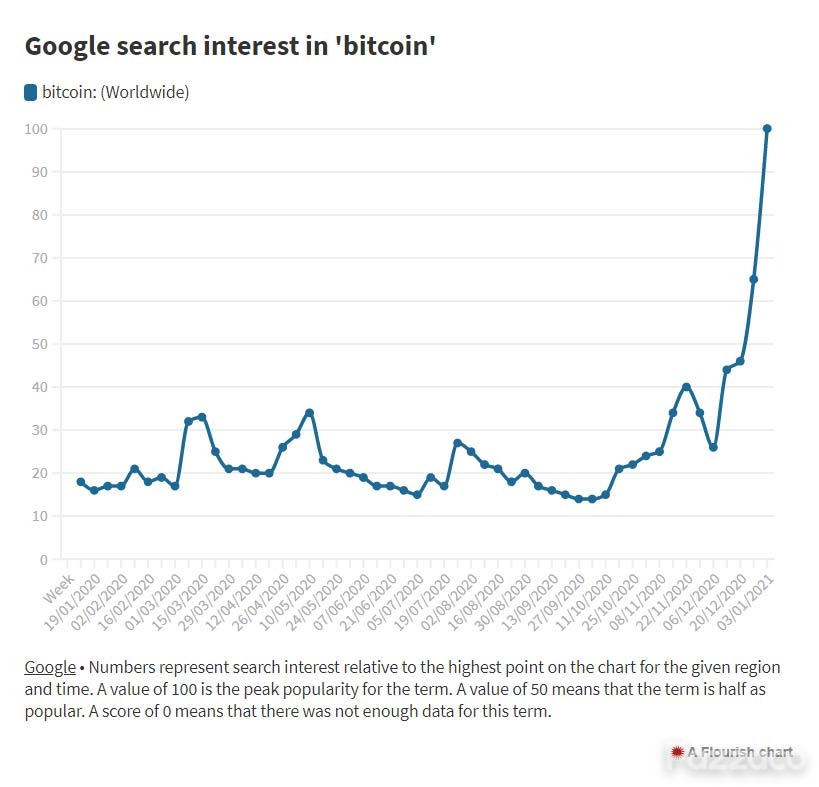
Image Source: CNBC
Variety in Crypto Assets Matters as Much as the Investment Vehicle
Catching up on the Bitcoin FOMO is not the only reason for increased crypto trading. As fears of inflation lead to a decline in growth stocks, traders are repositioning their portfolios.
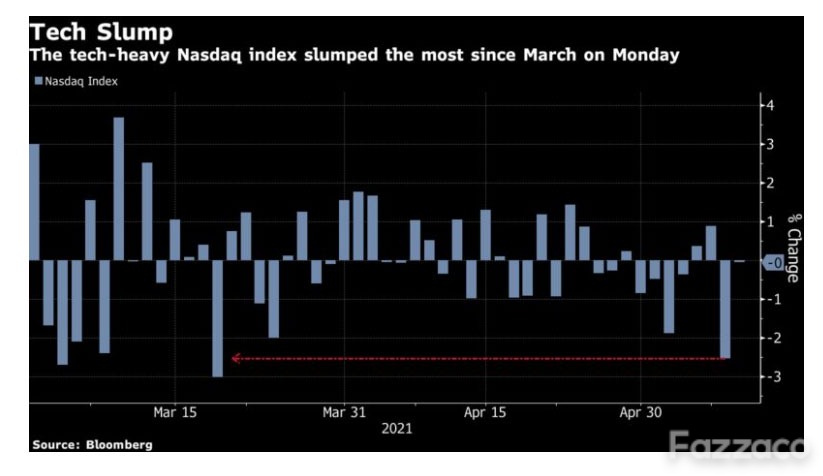 Image Source: Bloomberg
A slowdown in equity trading has led to rising interest of day traders and investors in speculative assets like cryptos. When it comes to speculative assets, derivatives like CFDs, futures and options play an important role as risk management tools. Trading in crypto derivatives has been increasing for some time now. In Q3 2020, transaction volumes in the crypto derivatives market increased 25.1% from Q2 and 159.4% YoY.
According to a study by the Carnegie Mellon University CyLab, crypto derivative trading volumes surpassed regular crypto spot markets by a factor of 5. Experts say that apart from risk management, the derivatives markets support liquidity and offer different asset options as well.
Retail Traders are Largely Amateurs
Market experts are not worried about the rise in retail traders, but they are concerned that many are uninformed and/or inexperienced. In the United States, only 17% of 18-to-34-year-olds can answer 4 out of 5 basic financial literacy questions. This highlights the lack of vital knowledge that can help traders stay safe, such as protecting wallets from hackers, navigating high price volatility and choosing the right crypto assets to trade.
What Brokers Need to Do to Stay Ahead of the Curve
Cryptocurrency trading has attracted a whole new section of the population to the financial markets. Brokers can utilise this evolution to design a completely new services model.
Educating Clients about Cryptos
Digital assets are a fairly new technology, and there is increasing evidence of FOMO-driven trading activities. Brokers who provide extensive educational resources, in the form of articles, eBooks, videos, market analysis, surveys and more, can help their clients protect themselves against volatility risks, while also attracting new clients.
For example, eToro runs an entire course for traders on how to trade cryptocurrencies. Traders can also access the latest news and analysis, daily market reviews, financial market guides, video tutorials and podcasts.

Offering Withdrawal and Deposits in Cryptos
Millennials will drive a new era of fintech, as they adopt cryptos for everyday transactions in the coming years. According to the 2021 Mastercard Payments Index, 93% of the people will use one emerging payment method, such as cryptos, biometrics and QR codes, in the next year. Additionally, 40% people across North America, the Middle East, Africa, and Latin America plan to use cryptocurrencies by next year.
Apart from providing crypto assets, brokers now need to consider allowing clients to deposit and withdraw in cryptos too, to reduce transaction costs. For instance, CryptoGT allows clients to deposit and withdraw in 18 popular cryptocurrencies.
Staying on Top of Compliance
Regulatory compliance remains the elephant in the room, when it comes to crypto assets. Major institutions like the UK FCA and ASIC have laid down guidelines for the trading of digital assets. For brokers, this means ensuring that they remain compliant in terms of content, leverage offered and choices of assets.
In the rapidly evolving landscape of digital assets, this is the time for brokers to move quickly to offer the most in-demand services and assets for trading.
 Subscribe Now

