


S. Korea Pledges Unlimited Liquidity to Stabilize Markets After Political Turmoil Last Night
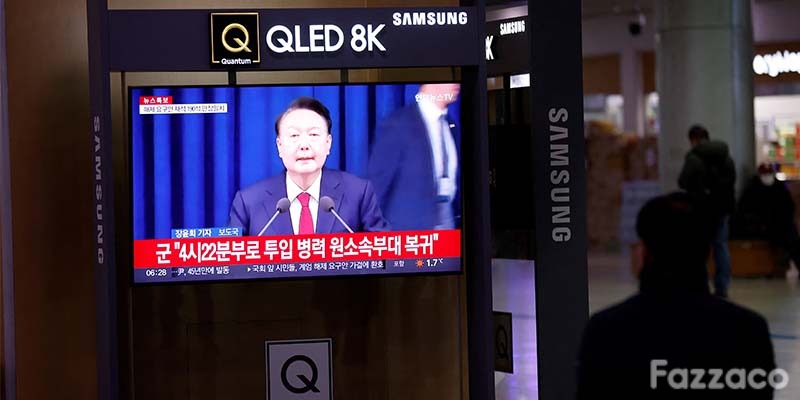
South Korea's government and central bank have taken aggressive steps to stabilize financial markets after a brief but impactful political crisis triggered by President Yoon Suk Yeol's declaration last night - and subsequent withdrawal - of martial law. The won fell sharply to a two-year low, and stock markets experienced heightened volatility as investors reacted to the turmoil.
Finance Minister Choi Sang Mok and Bank of Korea Governor Rhee Chang Yong convened emergency meetings, pledging to inject "unlimited" liquidity into key financial sectors. This move aims to restore confidence across foreign exchange, bond, and equity markets. Authorities announced plans to activate stabilization funds worth up to ₩50 trillion ($35 billion) if necessary, signaling their readiness to intervene decisively to prevent a broader financial crisis.
The won initially dropped 2.5% against major currencies, including the Japanese yen, before paring some losses. On the international front, South Korean ETFs listed in New York, such as the iShares MSCI South Korea ETF, fell by about 6.6%, reflecting investor concerns about political uncertainty. Meanwhile, major stocks, including Samsung Electronics, saw declines as market sentiment remained fragile.
The political conflict centers around President Yoon's contentious martial law decree, which he justified as necessary to safeguard constitutional order against perceived threats from opposition forces. Parliament swiftly passed a unanimous motion to overturn the declaration, intensifying political friction. Calls for Yoon's impeachment have gained traction, with analysts warning that a snap election could exacerbate market uncertainty.
Financial regulators are particularly concerned about the potential for margin calls and liquidity stress among institutions. To mitigate these risks, the central bank expanded its open market operations, allowing more securities for repurchase agreements and widening participation among financial institutions.
Despite the turmoil, market experts noted that the muted bond market reaction indicated a cautious optimism. Yields on South Korean government bonds saw modest changes, suggesting confidence in the government's intervention measures. However, energy stocks, particularly those linked to nuclear power, faced sharp declines due to fears of policy reversals under a possible opposition-led government.
As Asia's fourth-largest economy navigates this critical juncture, investors remain watchful of political developments and their implications for economic stability. The government's promise of unlimited liquidity underscores its determination to maintain market confidence, even as broader reforms to address long-term structural issues - such as the so-called "Korea discount" - remain on the agenda.
 Subscribe Now