


The Fintech Ecosystem and Its Four Key Elements - Fintech Series (III)

Markets worldwide are becoming more efficient, and customer experience as a whole is getting improved greatly, thanks to the continuous technological innovation these years, which is a result of, and stimulated by the financial technology (or fintech) ecosystems.
Normally, when we speak of the term, we are talking about an ecosystem that is a geographic area where plants, animals, and other organisms, as well as weather and landscape, work together to form a bubble of life. Inspired by its meaning, the digital world adopted the term and extended the meaning to refer to a distributed, adaptive, open socio-technical system with properties of self-organization, scalability and sustainability.
In the fintech circle, the term ecosystem comprises the following key elements, which are Business Environment / Market Accessibility, Government / Policy Support, Funding, and finally, Financial Expertise.
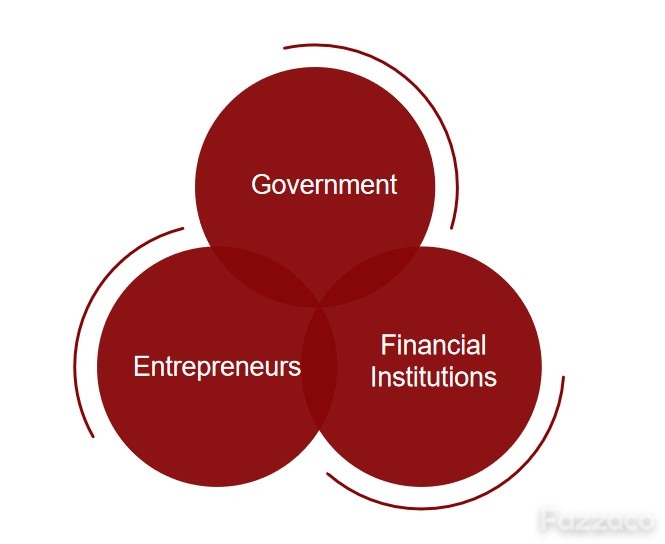
Participants of A Fintech Ecosystem
The degree of persistent engagement required among governments, financial institutions, and entrepreneurs makes establishing and fostering a fintech ecosystem tough. Each stakeholder in a fintech ecosystem must have a clear understanding of their position and the rewards they stand to receive from participating.
For governments, they must enact legislation and create a regulatory framework that will facilitate the growth of the fintech sector. This promotes entrepreneurship and employment by financial services and technology companies. It boosts the country's overall competitiveness as well.
For financial institutions like global and local banks, private equity firms, and venture capital funds may all offer valuable material and industry knowledge to the ecosystem. In addition, many of these financial institutions may boost their own innovation by partnering with fintech firms. These collaborations can help financial institutions compete more effectively by reducing the time it takes for innovative goods and services to reach the market.
For entrepreneurs, they contribute to the finance sector with creative and frequently disruptive technology solutions. Entrepreneurs have increased access to capital and commercial experience, as well as a willing market for their products, in exchange.
Elements of A Fintech Ecosystem
As mentioned above, four key elements make up what is needed to support an ecosystem.
Business Environment / Market Accessibility

If fintech ecosystems are to thrive, they must generate an overall cost advantage for operating in a country or area. Facilities (such as land and real estate), equipment, technology, and utilities, for example, must all be available and inexpensive.
The degree of integration and synergy among the parties is also a consideration. Technology clusters (or hubs), which bring together entrepreneurs with similar business goals, make it simpler for the ecosystem to thrive. These clusters help to increase the availability of specialized labor and know-how (for example, banking analysts, IT developers, salespeople, and management personnel).
Infrastructure quality is quite crucial. This comprises the state of physical infrastructure (for example, roads and ports), the ecosystem's linkages (for example, distance from current commercial centers and ease of access), utilities (power, water, and telecommunications, to name a few), and the general quality of real estate and amenities.
Government / Policy Support

Many components of the ecosystem may be influenced by governments, including lowering corporate laws (such as copyright, product registration, and IPO requirements) and keeping taxes and fees low. The level of the government's engagement, on the other hand, might vary. The private sector dominates the service provider landscape in somewhat established fintech ecosystems such as the United Kingdom and the United States. The government's function in these nations is confined to policymaking, regulation, and property development. In less established fintech countries, however, the government should be active across the whole ecosystem.
Funding

Governments may contribute to the development of the fintech cluster by giving seed money, interest-free loans, or even subsidized office and co-working space. This can be accomplished by forming a consortium of banks. To stimulate investment in small enterprises, the government may grant early financial support to venture capital or private equity funds, banks, and incubators.
Traditional investors in fintech businesses include venture capital funds and private equity firms. As these business models acquire traction and achieve critical mass, the engagement of funds is likely to rise.
Incubators and accelerators help institutions prepare for venture capital funding by offering grants and investments. They become a one-stop shop for buyers and sellers in the ecosystem by providing finance and due diligence services to enterprises.
Financial Expertise

To structure the ownership of a fintech ecosystem, provide advisory services to entrepreneurs from the early stages of idea generation through commercialization, and finally, provide legal and regulatory counseling to ensure compliance with local law and tax regulations, a broad financial expertise and know-how is required.
These specialists may also help campaign for financial or regulatory steps to make the creation and purchase of startups easier (e.g., easing IPO requirements, lowering taxes, and allowing governments to participate financially). Furthermore, by advocating for fewer business restrictions (e.g., copyrights, product registration), these specialists assist entrepreneurs and financial services firms while also improving the whole ecosystem's appeal.
Previous Articles:
Is Fintech Reshaping Finance? - Fintech Series (I)
3 Points to Consider When Choosing A Right KYC Provider - Fintech Series (II)
 Subscribe Now

