


The Middle East's Crypto Landscape: UAE Charges Ahead, Kuwait Stands Cautious?
At the recently concluded FastBull Summit in Dubai (April 16–17), cryptocurrency trading was undeniably the star topic. Over the course of just two days, the summit hosted two roundtable discussions and one keynote speech focused solely on digital assets. This intense spotlight clearly reflects a profound shift in the Middle East's stance toward digital assets. Not long ago, the region's general attitude toward blockchain and cryptocurrencies was marked by caution, if not outright skepticism. Yet the winds are changing. Some nations are now boldly embracing this new frontier, and leading the pack by far is the United Arab Emirates (UAE), rapidly emerging as the region's digital asset trailblazer.

Gustavo Antonio Montero's keynote speech on where crypto trading is headed at FastBull Summit, April 17, 2025
Ripple Gains Approval: UAE Leads a Payment Revolution
One milestone event deserves special mention: March 13, 2025. On that day, blockchain payment giant Ripple announced it had received the green light from the Dubai Financial Services Authority (DFSA) to legally offer crypto payment services within the Dubai International Financial Centre (DIFC). This not only made Ripple the first blockchain payment firm to obtain such a license but, more importantly, opened a new door for UAE-based businesses - enabling them to leverage solutions like RippleNet to conduct cross-border transactions more cheaply, quickly, and transparently than traditional banking channels ever could. It perfectly aligns with the current demand among financial institutions for payment innovation.
A Ripple survey conducted in 2024 further underscores this momentum: an impressive 64% of financial leaders in the Middle East and Africa expressed optimism about blockchain's potential to revolutionize cross-border payments, and over 82% were confident in integrating blockchain solutions into their operations. Riding this wave, stablecoins are poised to play an increasingly central role in the UAE's financial landscape. Ripple's own USD-backed stablecoin, RLUSD, has reportedly surpassed a market capitalization of $130 million - a testament to the region's growing appetite for digital assets.
A $2 Billion Bet on Binance: UAE Doubles Down on Crypto's Future
Hot on Ripple's heels, another headline-grabbing move rocked the market in March 2025: Abu Dhabi-based investment group MGX announced a massive $2 billion investment in Binance, one of the world's largest cryptocurrency exchanges. The deal is notable for several reasons. It marks the largest institutional investment Binance has ever received, one of the largest single-ticket investments in crypto history, and the transaction was settled using stablecoins.
Binance is no stranger to the UAE - it already boasts nearly 1,000 local employees. This investment sends a resounding signal: the UAE government is all-in on the crypto industry, staking its future on becoming a global hub for crypto innovation. It's a strategic move to pivot the economy toward technology and reduce dependence on oil. Even as Binance faces regulatory hurdles in the U.S., France, Nigeria, and elsewhere, the UAE remains undeterred, betting that supporting Binance will help meet soaring demand for crypto economy services - and carve out a uniquely Emirati approach to digital asset regulation and innovation.
Diverging Paths: UAE vs. Kuwait on Crypto Policy
Interestingly, even as the UAE embraces digital assets with open arms, its traditional financial ties with neighboring Kuwait are only growing stronger. In February 2024, the two countries renewed a series of agreements aimed at avoiding double taxation, promoting investment, and enhancing exchange cooperation. Yet, when it comes to the emerging world of crypto, their camaraderie stops short.
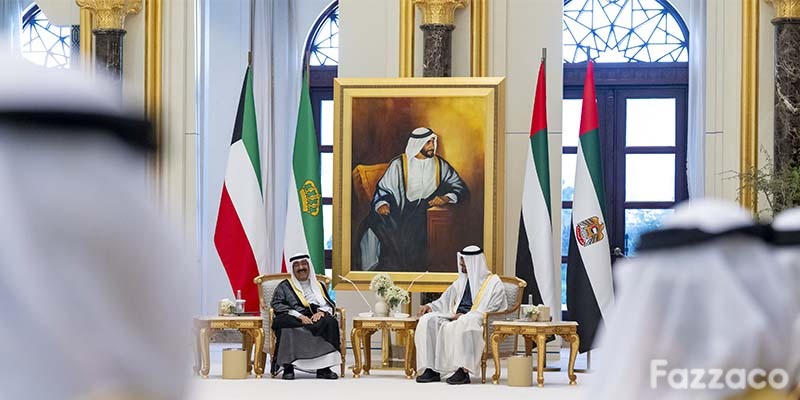
Facing similar economic transformation challenges, the two Gulf nations are taking vastly different approaches to cryptocurrency. The UAE is adopting a two-pronged strategy: encouraging investment while simultaneously regulating the sector through licensing and supportive laws - the energy at the FastBull Summit being just one vivid reflection. Kuwait, by contrast, remains exceedingly cautious. It appears unmoved by the economic potential of digital assets and has issued strict prohibitions against their use.
This divergence even extends into their views on gambling. The UAE has begun setting up regulatory bodies to oversee and grow a legal gambling industry within its borders. Meanwhile, although many online gambling platforms target Arab players under foreign regulation, Kuwait continues to treat gambling as a complete domestic taboo, with no signs of legalization or regulatory development. Since many gambling platforms accept crypto payments, this policy gap further hints at broader differences in their digital asset futures.
Conclusion
Looking ahead, the UAE's breakneck sprint down the crypto track is undoubtedly redrawing the fintech map of the Middle East. Through licensing, investments, and clear regulatory frameworks, it is steadily building a formidable digital asset ecosystem - and offering a tangible model for other hesitant nations to consider.
As for Kuwait, its current emphasis on caution and conservatism may seem prudent. But as the UAE's economic footprint expands through innovation and modernization, Kuwait may eventually be compelled to reassess its own positioning. With the Middle East's modernization drive and the relentless global tide of financial innovation, whether Kuwait continues to hold its ground or adjusts its course will be a fascinating dynamic to watch. In any case, the policy interactions and potential "catalyst effect" between these neighbors will be key factors in shaping the Gulf - and the broader Middle East's - digital economy evolution in the years ahead.
 Subscribe Now