


Tradesmarter: WOW Trader, CRM and White Label Broker Technology
Tradesmarter supplies white label trading technology that combines a client trading interface with CRM, back-office administration and operational integrations. Its WOW Trader product focuses on margin trading across FX, CFDs and crypto, while the broader product portfolio also includes other trading formats and a prop challenge module. For brokerage teams, the central proposition is a connected operating environment: a branded customer experience supported by the tools used to manage accounts, configure trading conditions and coordinate client service.
The distinction between the trading interface and the operating system behind it matters. A platform launch involves more than displaying prices and accepting orders. Sales teams need customer records, dealers need instrument and risk settings, and finance teams need funding information that can be reconciled with account activity. Tradesmarter brings these functions into a common product offering, with the final configuration determined by the operator’s selected products and integrations.
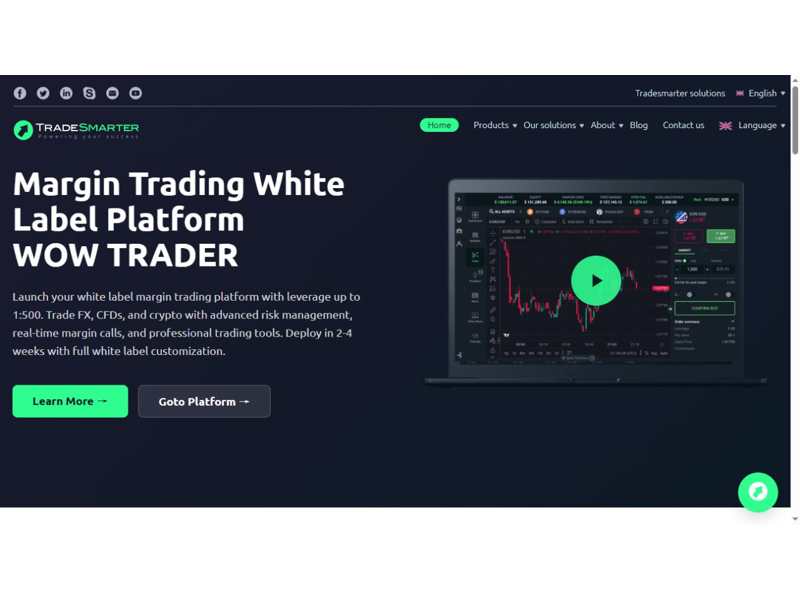
WOW Trader margin trading platform. Source: Tradesmarter.
WOW Trader and the margin trading experience
WOW Trader is presented as Tradesmarter’s white label margin trading platform. Its product page describes FX, CFD and crypto trading, margin-call notifications, configurable leverage levels and swap-free account options. The interface supports both units or lots and an investment amount expressed in a base currency. This helps connect the size of a position with the money amount a customer sees when preparing an order.
Order entry includes take-profit and stop-loss controls presented through visual sliders, alongside pending orders triggered when a selected price is reached. These interface choices are relevant to brokers designing a simpler customer journey without removing the need to explain how an order works. The product presentation also describes advanced TradingView charting and other chart-provider options. The actual chart package, available instruments and trading conditions should therefore be considered together when defining the branded service.
For example, a broker introducing a new client segment could configure an order panel, choose the instruments displayed and decide which leverage settings are available to each account level. The useful implementation outcome is consistency: the amount shown before submission, the resulting position size and the account’s trading conditions should agree throughout the customer journey.
Branding across web and mobile channels
Tradesmarter offers theme customization and describes deployment through standalone platforms, embedded interfaces, widgets and APIs. The website also presents a progressive web app and a trading experience intended to work across different devices. For a broker with existing marketing pages or a client portal, these delivery options create several routes to introducing the trading interface into the wider service.
Branding extends beyond a logo. Colors, fonts, navigation, order-entry language and the relationship between the cashier and trading screen all affect how customers recognize the service. A responsive interface is especially useful when registration begins on a phone and account activity later continues on a larger screen. Product selection should include a review of this full journey rather than a single desktop demonstration.
A practical design review can follow one customer through registration, funding, order placement and account reporting on both mobile and desktop. This reveals whether the selected configuration preserves the same terminology and account information across channels. It also gives customer-service teams a concrete journey to use in their training materials.
CRM for sales, service and customer communication
The CRM offering combines sales, service and marketing functions. Tradesmarter describes synchronization across platforms, channels and users, together with click-to-call and click-to-mail actions directly from customer records. Agents can also use customizable email templates. These capabilities connect customer information with the communication tools employees use during daily work.
The operational value comes from making a record usable by several teams. An employee handling an account question needs the relevant customer context, while a sales manager needs visibility into follow-up activity. A shared CRM can support that coordination when ownership, access and escalation rules are defined clearly. Software functions and the broker’s own operating procedures therefore need to be configured as one workflow.
The company describes its CRM infrastructure as cloud-based and containerized. That is an architectural statement about how the service is delivered; the deployment agreement should establish the capacity, support and service responsibilities applicable to the chosen configuration. For a growing operator, the important planning issue is how additional staff, channels and account activity will be accommodated as usage increases.
Back-office configuration and dealing controls
WOW Trader’s Admin Manager is described as providing settings for spreads, swaps, symbols and risk management by group or risk level. The wider platform presentation includes account-based and tiered risk settings, profit-and-loss limits and high-risk watchlists. Grouping customers and instruments gives operators a structured way to apply different service configurations within the same environment.
These settings have direct consequences for daily administration. Adding a symbol involves more than making its name visible: the trading conditions, account permissions and associated risk configuration must fit the intended offering. Likewise, changing a group setting should be understood in terms of the accounts affected and the information employees need to support those customers.
A useful acceptance exercise is to configure two account groups with different conditions, place representative test orders and compare the customer display with the back-office result. This connects the advertised control set with the operator’s actual workflows. It also provides a basis for staff responsibilities when trading conditions or account assignments change.
Payments, liquidity and communication integrations
Tradesmarter’s integration offering connects several distinct operating functions. Its website names Praxis, Safecharge and Zotapay in the payment-gateway context and describes an embedded payment widget. It also describes liquidity connectivity through direct FIX API connections or the oneZero hub. Messaging and telephony are presented alongside an agent email system connected to CRM operations.
These connections play different roles. A payment integration supports a funding journey, while a liquidity connection supports access to pricing and execution infrastructure. A CRM communication tool helps an employee act on customer information. Treating them as separate workstreams makes the implementation easier to define, even where they are delivered within one software package.
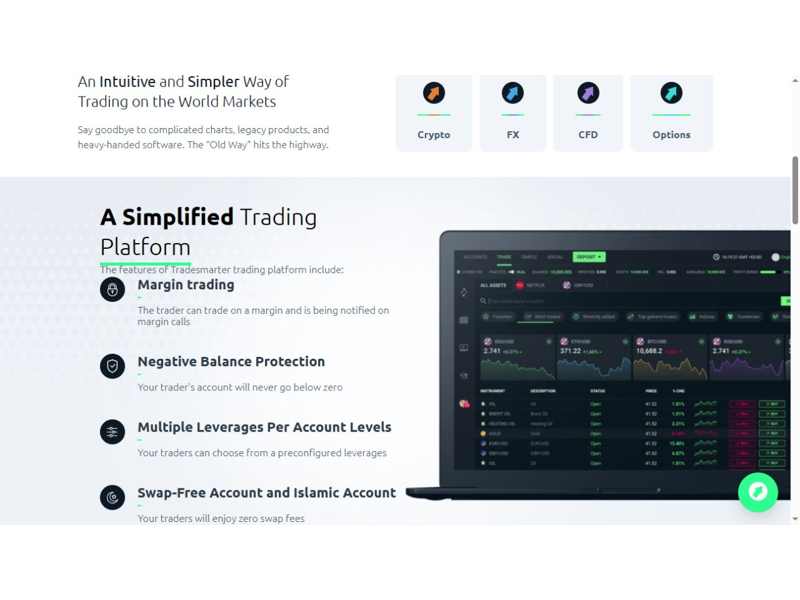
WOW Trader interface and account features. Source: Tradesmarter.
| Component | Role in the brokerage workflow | Implementation focus |
|---|---|---|
| WOW Trader | Customer trading and order entry | Instruments, account conditions and interface configuration |
| CRM and communications | Customer records and employee follow-up | Ownership, access and service escalation |
| Admin Manager | Symbols, spreads, swaps and group settings | Consistent configuration and controlled changes |
| Payment connections | Customer funding and cashier interaction | Payment status, account updates and reconciliation |
| Liquidity connectivity | Connection to pricing and execution infrastructure | Selected counterparties, symbols and trading workflow |
A connector’s presence does not by itself define the operator’s commercial relationship with its provider. The project plan should identify the services being activated, the responsible counterparties and the account information exchanged. This is particularly important when several external providers participate in a single funding or trading journey.
Affiliate tracking and prop challenge operations
The affiliate platform tracks clicks, leads and conversions and assigns commissions to the relevant affiliate. It gives the acquisition team a way to connect referral activity with business outcomes. For operators using multiple acquisition partners, the practical requirement is a clear definition of each conversion event and the commercial arrangement that determines the resulting commission.
Tradesmarter also describes a prop trading module with configurable plans, fees, trading periods, daily drawdown, profit targets, total drawdown and minimum trading days. Evaluation stages can be customized, with notifications associated with progress through a challenge. These functions address a different workflow from ordinary brokerage account administration: they organize an evaluation product around a defined set of rules and stages.
For a firm offering challenges, the customer-facing rules and the configured evaluation logic need to agree. Teams can test representative paths such as reaching a target, exceeding a drawdown threshold or completing a minimum-day requirement. The aim is a coherent product experience in which dashboard information, stage changes and staff explanations all refer to the same rules.
Commercial models and deployment planning
The current website presents revenue-share, fixed-license and enterprise commercial models. Enterprise arrangements are positioned around operators launching several product verticals. This is a broader choice of commercial structure than a single universal subscription price. A proposal should identify which products, integrations, customization and operating services belong to the selected package.
Tradesmarter advertises deployment in two to four weeks for its branded platform offering. That vendor timeline is a planning reference rather than a substitute for a project schedule. Brand assets, account configuration, external-provider arrangements, data preparation and acceptance testing remain concrete work items. Assigning owners to these dependencies helps a broker turn a proposed launch date into a deliverable implementation plan.
Where Tradesmarter fits in a broker’s technology stack
Tradesmarter is relevant to operators seeking a branded trading interface together with customer-management and administrative tools. WOW Trader addresses the trading journey, CRM supports client communication, and the back office brings account and instrument settings into the operating environment. Affiliate and prop modules extend the scope into acquisition and evaluation workflows.
The clearest way to assess that combination is through a complete business scenario: a referred customer opens an account, funds it through the selected cashier, trades under the configured conditions and later contacts support about the account. Reviewing the same scenario across trading, CRM, finance and administration shows how the product components connect. It gives a brokerage a concrete basis for deciding which parts of the Tradesmarter environment match its operating model.
 Subscribe Now

