


TS & SaxoTrader vs MT4: Why Do Forex Brokers Develop Proprietary Trading Platforms
Acting as a bridge linking traders to the global forex market, the trading platform is the core product a brokerage offers to its customers. Its user interface, configuration, charting, indicators, timeframes, operability, and integration with different devices are all key factors to be considered by a forex broker.
The idea of the trading platform being dominated by MT4 is so widely held that it has monopolised much thinking, from brokers' choices to investors' preferences. Yet, it is getting harder to sustain. After a long period of ossification, the industry is entering a dynamic phase.
Challengers
The lack of customisation for MT4 is likely to have been one of the key triggers for many retail brokers opting for an additional platform. On top of that, MetaQuotes has endeavored to replace it with MT5, though it is still struggling with users' viscosity to old MT4. Moreover, many forex brokers are looking for an additional platform to become less dependent on MetaQuotes.
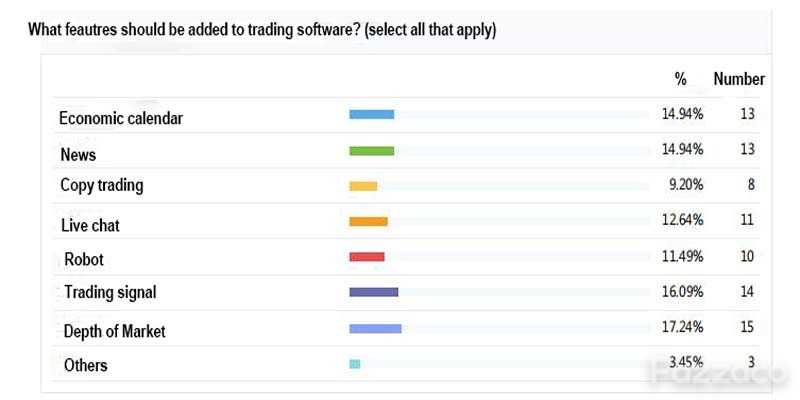
Fazzaco's survey on 22 forex brokers showed that the Depth of Market and economic calendar as well as news are the top features that should be offered on a trading platform, and MT4 falls behind in this regard.
The gale of owning proprietary platform once blew hard in the industry since forex brokers longed for chances to set themselves apart from competitors by offering customers a unique, bespoke, and attractive user experience. This has driven some forex brokers to adventure in developing proprietary trading platforms, such as FXCM, Saxo Bank, CMC Markets and Dukascopy.
FXCM
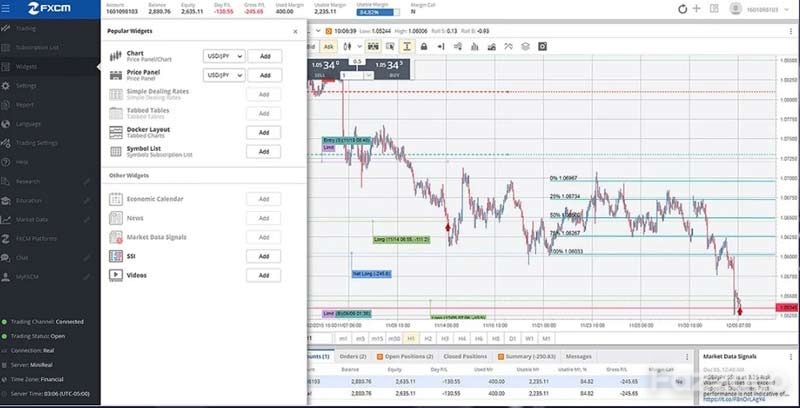
The award-winning Trading Station, or TS for short, supports multiple assets including forex, shares, commodities, indices, and cryptos. It is available on desktop, web, and mobile, and comes equipped with Market of Depth, economic calendar.
Though FXCM provides copy trading on advanced web platform ZuluTrade, TS is still a highlight to attract customers thanks to its powerful charting tools, 30+built-in indicators, 600+ customized indicators (including Speculative Sentiment Index and Real Volume indicator), robots, optimal backtesting, Good Till Date, and the most important, sleek design and intuitive interface, which completely differs from other MT4 forex brokers.
TS is also provided by Racuten Securities.
Saxo Bank
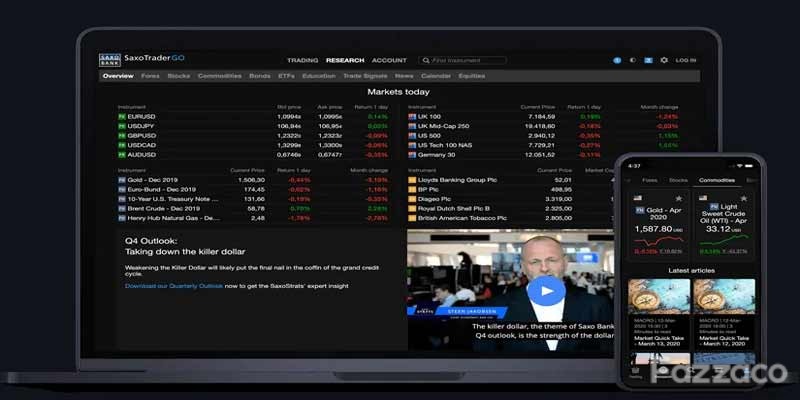
Saxo Bank has discontinued its support for MT4 in 2015 and now provides SaxoTraderGO and SaxoTraderPRO for customers.
Saxo supports trading of forex, stocks, commodities, FX options, ETFs, bonds, and funds. Both versions are available on mobile and desktop and are equipped with technical indicators, charts, algorithmic trading, analysis tools, and level 2 market data (subscription required). Trailing stops and stop-limit orders can also be placed on Saxo's platforms, proving the broker's tech strength.
The two versions differ to an extent anyway. SaxoTraderPRO is a downloadable application only, while SaxoTraderGO is web-based and can be accessed through any browsers. Besides, SaxoTraderPRO supports up to six screens on Windows and Mac, while SaxoTraderGO enables traders to trade the news and read economic calendars.
SaxoTrader series are also adopted by BenchMark, and HMS Markets Luxembourg.
TS & SaxoTrader vs MT4
Though remaining dominant in the forex market, MT4 is not unbeatable. Common complaints from users include its old-fashioned UI design and lack of functionalities, such as depth of market and cloud sync. In other words, MT4 is more suitable for beginners, and is far away to meet the demand of a professional trader.
On March 1, 2019, MetaQuotes declared to stop support for old versions of MT4. As a result, numerous brokers flocked to the latest version of MT4. If you were a broker, are you sure you want to negotiate away your control over your core product?
On the customer side, many investors are deeply poisoned by pirated MT4 and even forex scams because its wide popularity has become a breeding ground for software piracy, though it's not what MetaQuotes intended.
On the other hand, trading platforms developed by brokers themselves can target specific customer groups with different asset classes and markets. Highly configurable software can fit their own business processes and workflows better than MT4, seemingly a "one-size-fits-all" model for all brokers, thus streamlining brokers' operations and catering more to clients' needs. This is exactly what Saxo Bank had in mind when developing SaxoTraderGO and SaxoTraderPRO.
It may take no less than 5 years for a mature forex broker to make proprietary platform competitive in the market, but transferring customers to your own platform is a better choice than totally depending on a fintech giant. If you are interested in proprietary trading platforms or non-meta trader platforms, please check at trading software directory list.
 Subscribe Now