Add Fazzaco to desktop

Add Fazzaco to desktop

Access Fazzaco from desktop next time

Add now
English

Win-Loss Ratios of Retail Broker Clients: Most Losing Account over 85%

Source: Fazzaco

Winning and losing ratio has been a key issue for foreign exchange and CFDs brokers. If a broker has extremely high winning ratio, it’s more likely for them to on-board clients and stand out among competitive forex market.
According to the ESMA new measures conducted in 2018, brokers must perform a standardized risk warning, including indicating percentage of losses on retail investor accounts. Every EU-regulated broker is now visibly displaying such figures in their websites, so we collected a set of latest data from June, 2020, which provides valuable insight into the dealings of brokers.
​
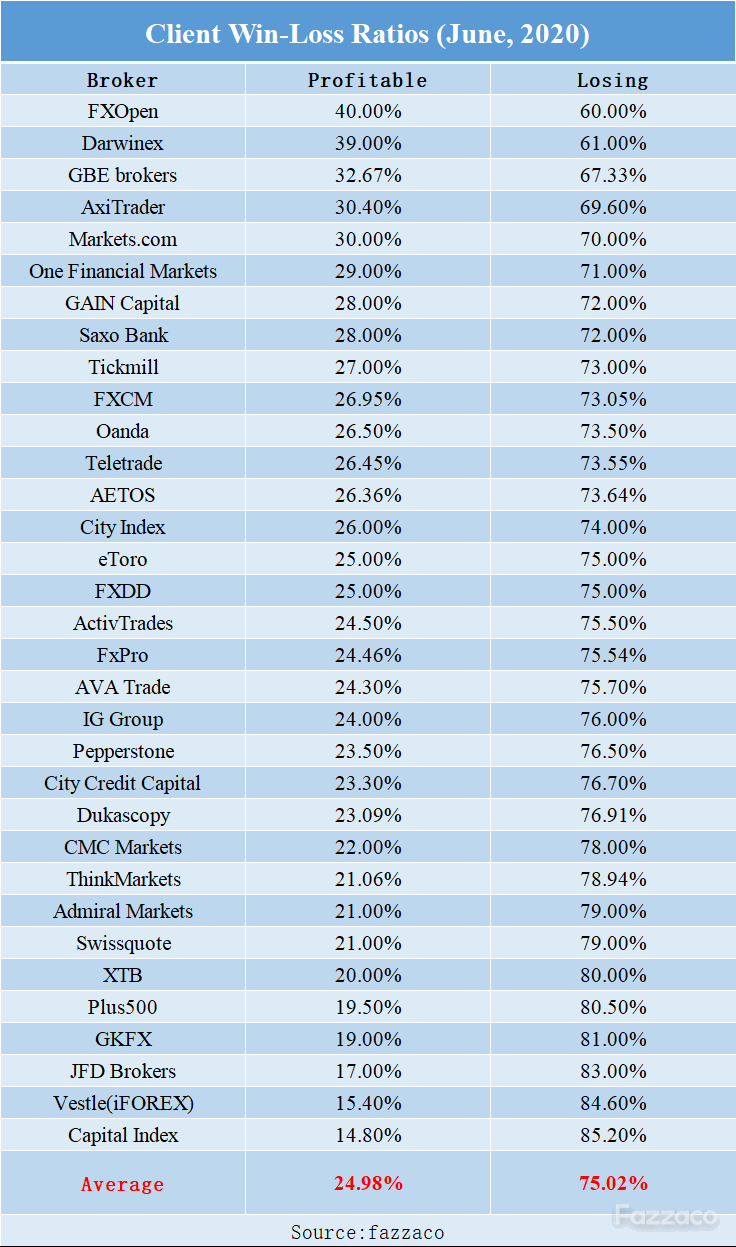
Win-Loss Ratios of 33 Retail Brokers
The list is compiled based on the winning rate from largest to smallest. We have collected a total of 33 brokers’ data.
As you can see from the chart, the average winning rate is 24.98% while the average losing rate is 75.02%.
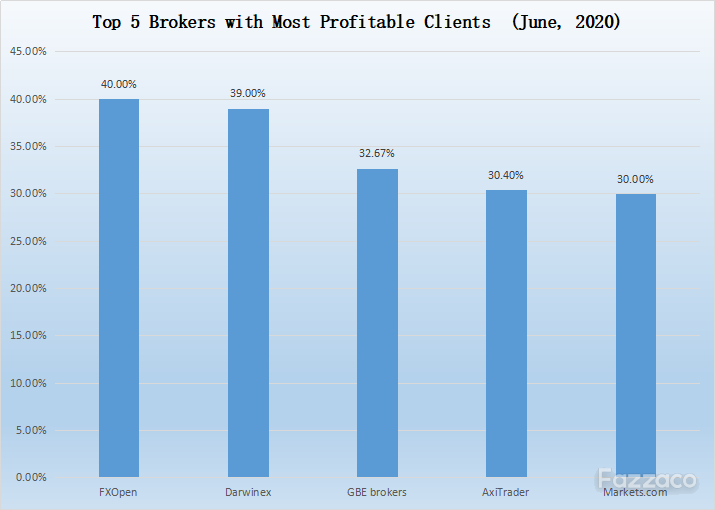
FXOpen ranks number one for a whopping 40% winning ratio. Darwinex is in second place with 1 percentage point lower than FXOpen’s. Other brokers in the top 5 are also notable: GBE Brokers, AxiTrader, and Markets.com.
Forex or CFDs are complex instruments and come with a high risk of losing money rapidly due to leverage. Although the measures ESMA has taken are a significant step towards greater investor protection in the EU, these can not stop traders from losing money.
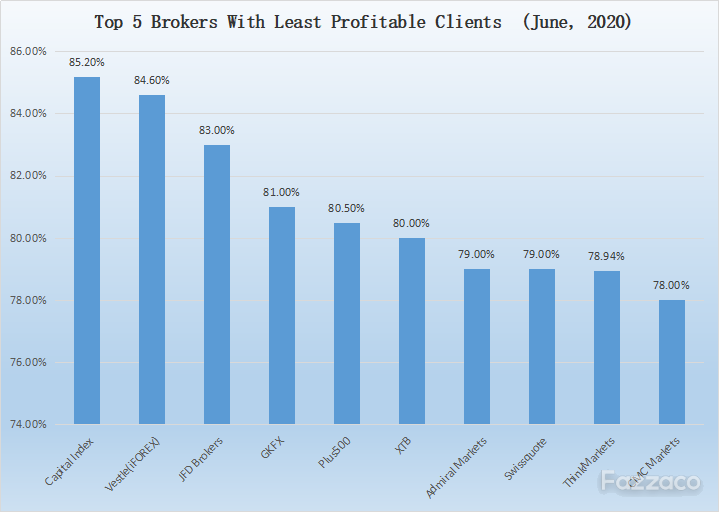
What these can only ensure is that investors cannot lose more money than they put in, and provide understandable risk warnings for investors. Brokers like Capital Index, Vestle (iFOREX), JFD Brokers, GKFX, and Plus500 are still shown over 80% losing ratio.
What Behind the Changes of Ratio?
It has been about two years since the ESMA adopted new measures.Compared with the win-loss ratios in the early periods, are there any changes?
According to the statistics from Finance Magnate in 2018, the average losing ratio is up to 76.5%, which is obvious higher than now. Then what result in this deduction?
Of course, to some extent, it owes to the ESMA leverage limit. EU-based retail clients can only use 30:1 on major FX pairs. Another point is that many brokers head offshore jurisdictions, which means the most risk-hungry clients also moving away from EU to overseas, therefore the losing ratio shows decreasing.
However, it should be noted that recently great changes have taken place in one of the popular offshore jurisdiction ---- Bahamas.
On the one hand, Bahamas legislation was passed to allow the Securities Commission of The Bahamas to implement leverage restrictions of 200:1, as well as ban binary options trading.
On the other hand, Bahamas becomes one of most expensive places for CFD licence, with annual cost of CFD licence increasing by 15 times.
So it remains to be seen whether the win-loss ratio keeps improving if other offshore jurisdiction follow the step of Bahamas. With the regulation change in offshore jurisdiction, a new forex landscape may be on the way.
Create Company Page