


Payments around the World - U.S
We live in a world where we can't live without making payments. Individual shopping, corporate procurement, investment or trading, and even governments are making payments all the time. In recent years, the rise of mobile payment as well as crypto payment are bringing the increasingly diversifying payment ecosystem even up a notch. For financial institutions, including forex brokers, it is one of the key cornerstones to settle down on a trustworthy payment service provider.
This "World Tour" will be the second after Fazzaco's "Cryptocurrency Regulations World Map", another series of featured articles by country (region). First stop: the United States.
How Payments Are Made in the U.S
In general, as shown by a survey conducted in 2020, 57% of the payment landscape in the country happened with card payment (debit, credit and pre-paid), closely followed by digital wallet, which is basically mobile payment, since the e-commerce market of the United States is of the second largest after that of China. In 2020, the adoption rate of mobile payment was already as high as 46%, a trend that is growing. Moreover, the overall landscape across all fifty states is still comprised of the gradually declining yet still used by too many to be ignored, that is personal checks, and cash, and of course, the rising crypto payment.
Interbank payment services are critical to the U.S financial system and its economy in a broader sense. Firms across all lines of business all need them, and are therefore put under the FED's supervision. So, famous payment providers in the U.S are subject to even more heightened supervision and regulation. For nonbank service providers, they highly rely on interbank payment infrastructures as well in order to transfer customer balances.
Nowadays, all sorts of new payment solutions are emerging. As reported by Fazzaco earlier, we've seen multiple new payment service operators opening in the States. In late June, LianLian Global, a cross-border payment service provider, announced to launch its multi-currency cross-border wallet after securing licenses to operate in all 50 states. The wallet supports American retailers and merchants on Allegro, Amazon, Cdiscount, Fruugo and Kaufland. In early July, a new digital payment platform, Kasheesh, was launched in the country, allowing users to split payment of online purchases across combinations of debit and credit cards, without added costs or interest increases. In mid-July, Argyle Payments, a new payment firm founded in California, also announced its launch in the United States.
The integrity of the payment system and other hazards could be posed by a few of these new payment providers, though. For instance, if the expansion of nonbank payment services were to result in a significant transfer of funds from commercial banks to nonbanks, the absence of the same protections that come with funds from commercial banks could result in run risk or other financial system instability.
Crypto Payment: Awkward Legal Status & Growing Acceptance
According to Fazzaco's article on the cryptocurrency regulations in the United States, the crypto market size of the U.S was 1.6 billion USD by 2021. Approximately 27 million U.S citizens (8.3% of the total population) own some sort of cryptocurrencies, and 46% of them will use them for payment.
However, cryptocurrencies are still seen as assets in the country. After the LUNA/TERRA crash this May, acting chief of the Office of the Comptroller of the Currency (OCC), Michael Hsu, said the recent fireworks in the crypto industry have further cemented his resistance to allowing lenders unfettered exposure to the digital assets markets, indicating that cryptocurrencies might face stricter regulations in the United States.
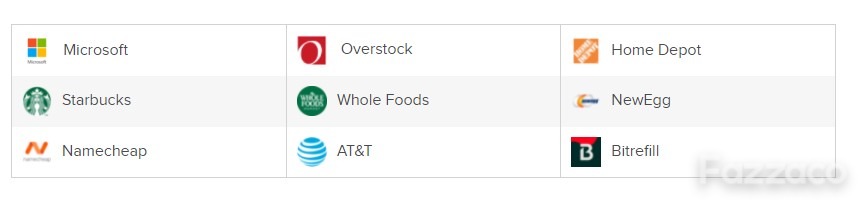
On the other hand, a number of U.S-based businesses are embracing crypto payment. Recent news show that from a Swiss luxury wristwatch brand to Chipotle, a fast food chain, are all accepting crypto payment as an option. Up until now, the following mainstream companies in the U.S are accepting crypto payment:
(Source: https://www.buybitcoinworldwide.com/who-accepts-bitcoin/)
What Are the Mainstream Payment Gateways in the U.S?
FX trading is popular in the U.S as well. Famous forex brokers that accept U.S traders include IG Group, Interactive Brokers, TD Ameritrade and Forex.com etc. In addition, a lot of startup brokers need reliable payment gateway for client deposit / withdrawal as well as institutional transactions.
Take the payment services for forex brokers as an example, they usually have to meet the following requirements: First, security. With PCI compliance and SSL verification, the security standard is increasing; second, multi-currency support, which is undoubtedly a must for the forex market where transactions of currency pairs are happening all the time; and third, anti-fraud. Besides, they usually require credit card processing, invoicing as well as global card saving functions too.
Fazzaco has published articles on white label payment services, an extremely important part for startup brokers, and the Top 5 payment providers for brokers around the world.
At present, mainstream payment gateways in the U.S include PayPal, Authorize.net, Stripe, 2Checkout (Verifone), and Amazon Pay etc.
An Intricate and Overlapping Regulatory Network for Forex Brokers
It is a common fact that the FX market is active twenty-four hours a day, five days a week, with a highly active liquidity. But lots of brokers are dealing all around the world except America. Well, forex trading is not considered illegal there, but many brokers do feel threatened by the complicated regulations.
The regulatory framework for payment services in the U.S is divided into two levels, federal and state, so a financial institution has to understand and abide by this intricate, and overlapping network if they want to carry out business inside the country legally.
Federal regulations alone, are not unified. There are Federal Reserve Board (FRB), Securities and Exchange Commission (SEC), Federal Deposit Insurance Corporation (FDIC), and for forex brokers, before accepting U.S investors, they also need to register as Retail Foreign Exchange Dealers (RFED), and are regulated by the Commodity Futures Trading Commission (CFTC) and the National Futures Association (NFA).
Some Thoughts on Payment Trends in the United States
Unlike UK or EU, there is no such a formalized legal regime in the U.S governing "open banking". However, the Biden Administration is urging the Consumer Financial Protection Bureau (CFPB) to come up with rules that allow users to download their banking data. On the other hand, there will be more laws on payment services regulation which will be more inclined to digital assets and fintech-related.
For forex brokers however, no matter how they are affected by the extremely intricate regulations and leverage limit, the situation is unlikely to turn for the better in the future. Because for U.S regulators, it is far more important to make sure the world's largest economy to remain stable than exposing it to more money-laundering and financial crime risks just to push the development of a certain aspect of financial services.
 Subscribe Now